
 Save
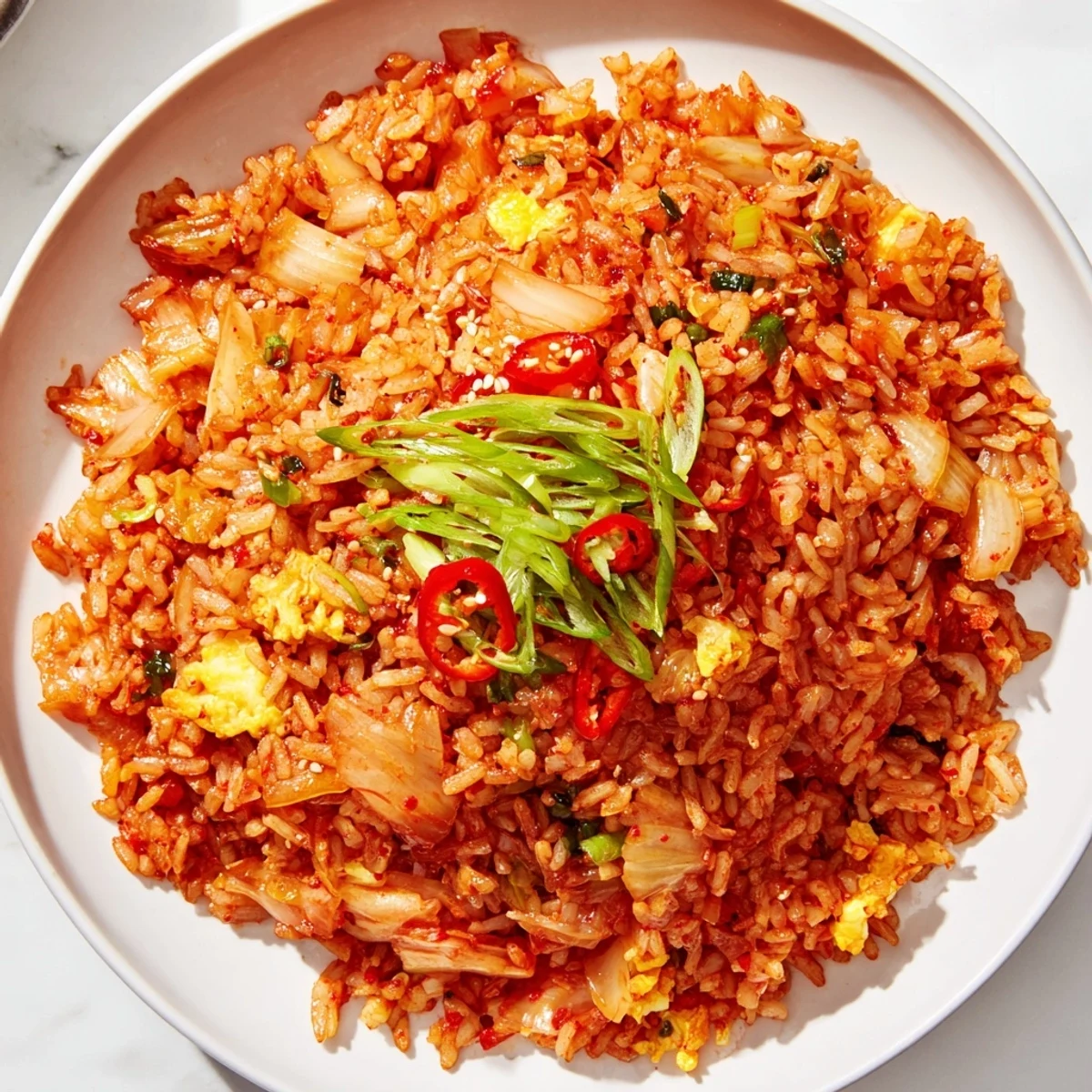
Save This kimchi garlic chili fried rice brings together bold Korean flavors in a quick 30-minute meal. Day-old jasmine rice gets stir-fried with tangy napa kimchi, aromatic garlic, and a savory gochujang-based sauce for a dish that's packed with umami.
The crispy scallion garnish adds a satisfying crunch, while the optional fried egg makes it hearty enough for a main course. It's an easy, adaptable dish that works for vegetarians and can be made vegan with simple swaps.
The sizzle of cold rice hitting a screaming hot wok on a rainy Tuesday night is a sound I have come to associate with survival. There is something deeply satisfying about rummaging through the fridge and finding a jar of kimchi that has been sitting long enough to develop a fierce, funky personality. This fried rice came together one evening when takeout felt too far and too expensive, and it has been my back pocket meal ever since. The crispy scallions on top were a happy accident born from distraction and a little too much oil in a separate pan.
I made this for my roommate once when she came home drenched from a downpour, and she stood over the wok eating straight from the pan with a wooden spoon before we even made it to the table.
Ingredients
- 2 cups cooked jasmine rice, preferably day old and cold: Fresh rice will turn gummy and sad, so plan ahead and spread leftover rice on a sheet pan to dry out overnight in the fridge.
- 1 cup napa kimchi, chopped, plus 2 tablespoons kimchi juice: The older and more effervescent your kimchi, the better the fried rice will taste, so do not be afraid of the bubbles.
- 3 cloves garlic, minced: Fresh garlic is non negotiable here because the jarred stuff lacks the sharp bite that balances the fermented richness of the kimchi.
- 1 small onion, finely diced: Any onion works but a mild yellow or white variety lets the kimchi stay in the spotlight.
- 1 medium carrot, diced: Small uniform dice ensures every bite has a sweet crunch without holding up the quick cooking time.
- 2 scallions, white and green parts separated: The whites become part of the aromatic base while the greens get fried into the most addictive little topping.
- 1 red chili, thinly sliced, optional: Leave this out if your kimchi and gochujang already have you at your heat limit, or double down if you like it fiery.
- 1 tablespoon soy sauce: A little goes a long way since the kimchi juice and gochujang already carry salt and depth.
- 1 tablespoon gochujang: This Korean chili paste adds a sticky, sweet heat that coats every grain of rice beautifully.
- 1 teaspoon toasted sesame oil: Added at the end as a finishing touch because cooking it dulls its nutty perfume.
- 1/2 teaspoon sugar: Just enough to round out the acidity of the kimchi without making anything taste sweet.
- Freshly ground black pepper: A few cranks over the finished rice add a gentle warmth that ties everything together.
- 2 large eggs, optional: Scrambled right in the pan for richness, or skipped entirely for a vegan version that still satisfies.
- 3 tablespoons neutral oil, divided: Canola or vegetable oil has a high smoke point and a clean flavor that lets the ingredients shine.
Instructions
- Get the wok roaring:
- Heat 2 tablespoons of oil in a large skillet or wok over medium high heat until it shimmers and just begins to smoke, then toss in the white scallion parts and listen for that immediate sizzle.
- Wake up the aromatics:
- Add the garlic and onion, stirring constantly for about a minute until your kitchen smells like a street food stall and the onion turns translucent at the edges.
- Bring in the carrot:
- Toss in the diced carrot and cook for two minutes, letting it pick up some color and soften just enough to lose its raw crunch without going mushy.
- Add the star of the show:
- Slide in the chopped kimchi and sliced chili if you are using it, and stir for two minutes until the funk and tang fill the air and everything glistens.
- Scramble in place:
- Push all the vegetables to one side of the pan, crack the eggs into the empty space, and scramble them until just set before folding them through the vegetables, or skip this entirely for a vegan plate.
- Add rice and season boldly:
- Dump in the cold rice and break up every clump with your spatula, then pour over the kimchi juice, soy sauce, gochujang, sugar, and pepper, stir frying for three to four minutes until each grain is evenly coated and slightly crispy in spots.
- Taste and trust yourself:
- Pause and taste a forkful, adding a splash more soy sauce or a pinch more sugar depending on what your palate tells you it needs.
- Fry the scallion topping:
- In a separate small pan, heat the remaining tablespoon of oil over medium high heat and fry the green scallion parts for one to two minutes until they bubble and crisp, then drain them on a paper towel immediately.
- Serve it proud:
- Pile the fried rice into bowls while it is still piping hot, scatter the crispy scallions over the top, and add extra chili slices if you want to turn up the volume.
 Save
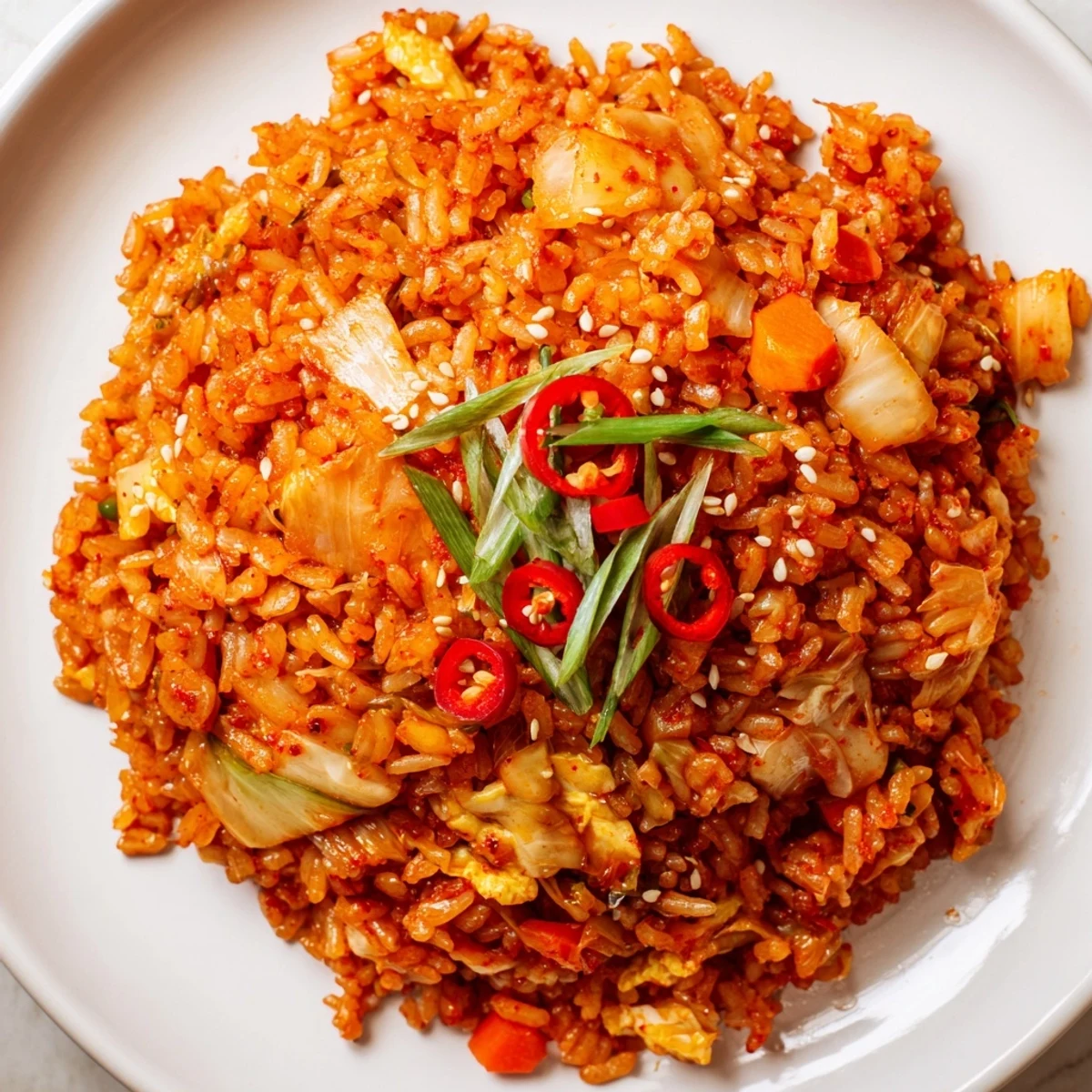
Save There was a night I burned the first batch of crispy scallions because I got pulled into a phone call with my mother, and I almost skipped making more, but the second batch saved the whole dish and taught me that those little crunchy green bits are worth every extra minute of attention.
Making It Vegan
Skipping the eggs is straightforward enough, but the real trick is sourcing vegan kimchi since many traditional varieties contain fish sauce or shrimp paste hidden in the ingredient list. Look for brands that explicitly label themselves as vegan, and check your gochujang too because some include anchovy extract. Tossing in cubed extra firm tofu or strips of tempeh at the same time as the kimchi gives you the protein and heft that eggs would normally provide.
Pairings And Drink Ideas
This rice is bold enough to stand entirely on its own, but if you want to round out the table, a simple cucumber salad dressed with rice vinegar and sesame seeds cuts through the richness beautifully. A cold lager or a crisp pilsner is my favorite match for the spice and funk, though a cup of green tea works just as well on nights when you want something warm and grounding. Avoid heavy red wines because they clash with the fermented acidity in ways that make both the food and the wine taste confusing.
Storage And Reheating
Fried rice is best the moment it leaves the wok, but leftovers keep well in an airtight container in the fridge for up to three days and reheat nicely in a dry skillet over medium heat. The microwave works in a pinch but you lose that slight crispness on the rice grains that makes the dish so satisfying. The crispy scallions will not survive storage with any dignity, so always make a fresh batch if you are reheating the next day.
- Store the scallions separately in a small container at room temperature if you have any left over.
- Add a splash of water or extra kimchi juice when reheating to bring the rice back to life.
- Never freeze this dish because the texture of the kimchi and egg will suffer terribly upon thawing.
 Save
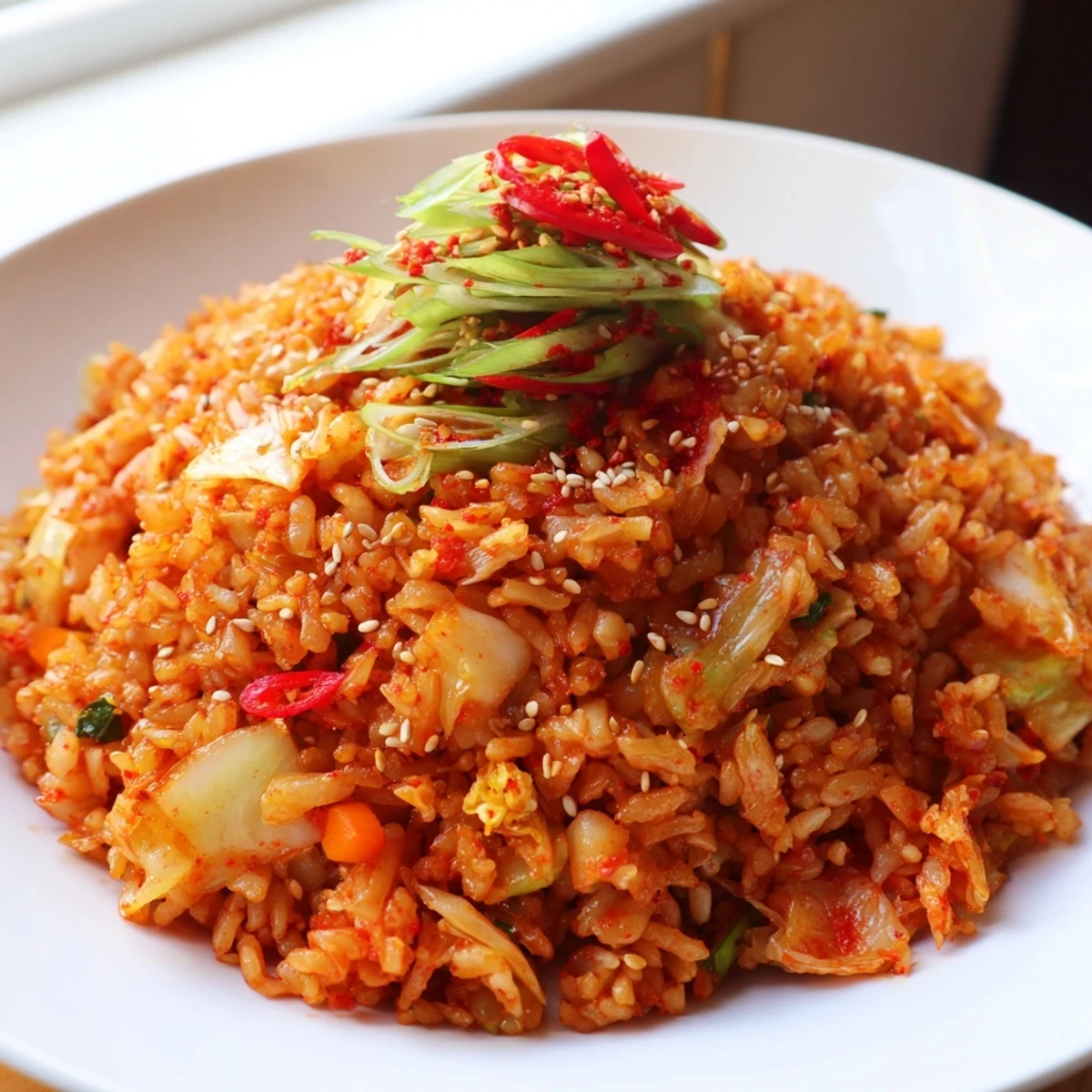
Save Keep a jar of aging kimchi in your fridge at all times and this recipe will always be twenty minutes away from saving your evening.
Recipe FAQs
- → Why use day-old rice for fried rice?
-
Day-old rice has dried out and firmed up in the refrigerator, which means it fries up with distinct, separated grains rather than turning gummy or mushy. Freshly cooked rice holds too much moisture and will clump together when stir-fried.
- → Can I make this without gochujang?
-
Gochujang provides a signature sweet-spicy depth that's hard to replicate, but in a pinch you can substitute a mix of sriracha with a touch of miso paste and sugar. The flavor won't be identical, but you'll still get a rich, spicy kick.
- → How do I get the scallions extra crispy?
-
Fry the scallion greens in hot oil over medium-high heat without crowding the pan. They should sizzle immediately and turn golden within 1-2 minutes. Transfer them straight to a paper towel so they don't steam and soften.
- → What type of kimchi works best?
-
Mature, well-fermented napa cabbage kimchi is ideal because it has developed a tangy, complex flavor. Fresh kimchi hasn't had time to develop the same depth. Save the kimchi juice from the jar — it's liquid gold for seasoning the rice.
- → How should I store and reheat leftovers?
-
Store leftovers in an airtight container in the refrigerator for up to 3 days. Reheat in a hot skillet or wok with a splash of oil to restore the texture. Avoid microwaving if possible, as it can make the rice soft and lose that characteristic fried chew.
- → Can I add protein to this dish?
-
Absolutely. Cubed tofu, sliced tempeh, or even leftover chicken and shrimp all pair well with the kimchi flavors. For tofu, pan-fry it separately until golden before adding it back in at the end so it stays crispy.