
 Save
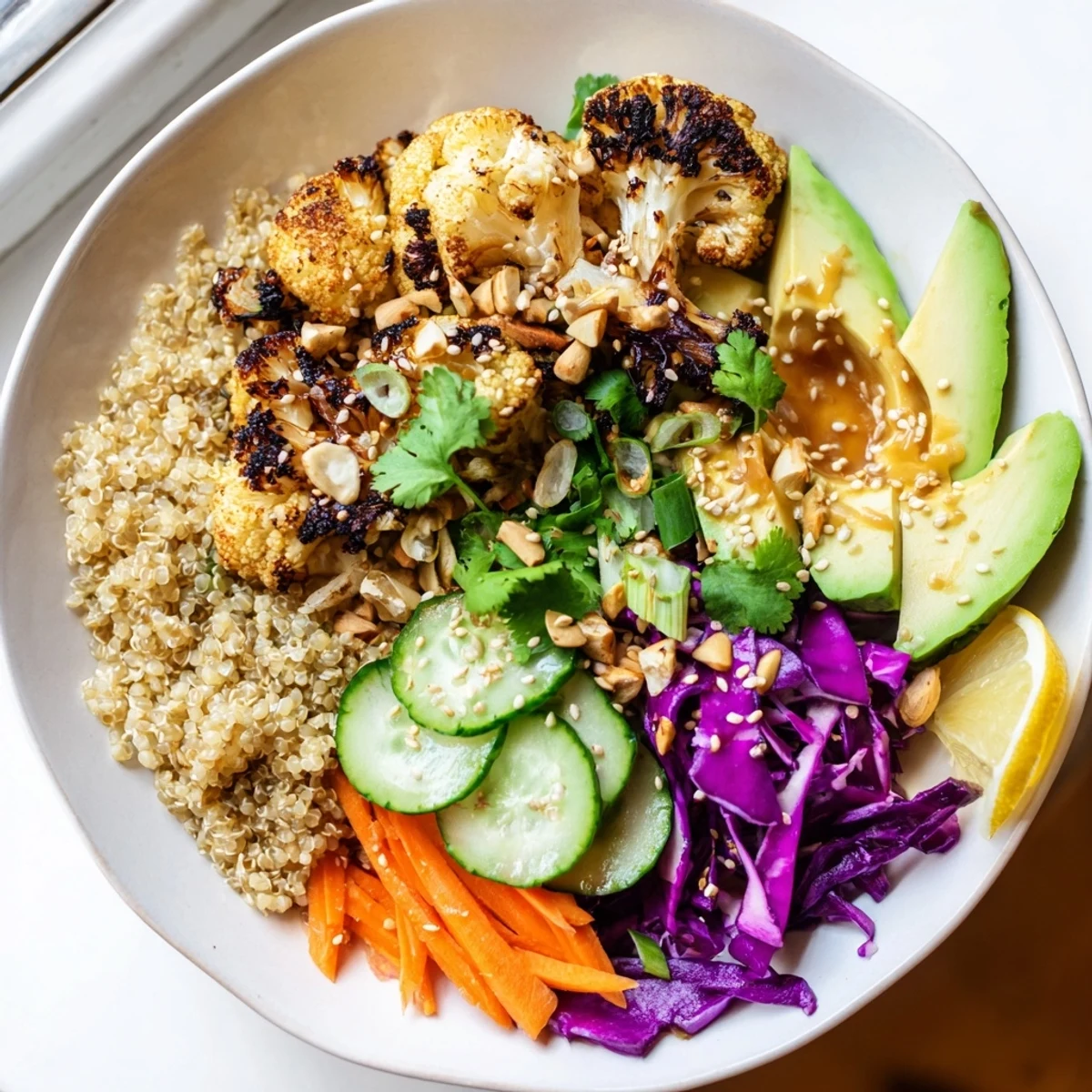
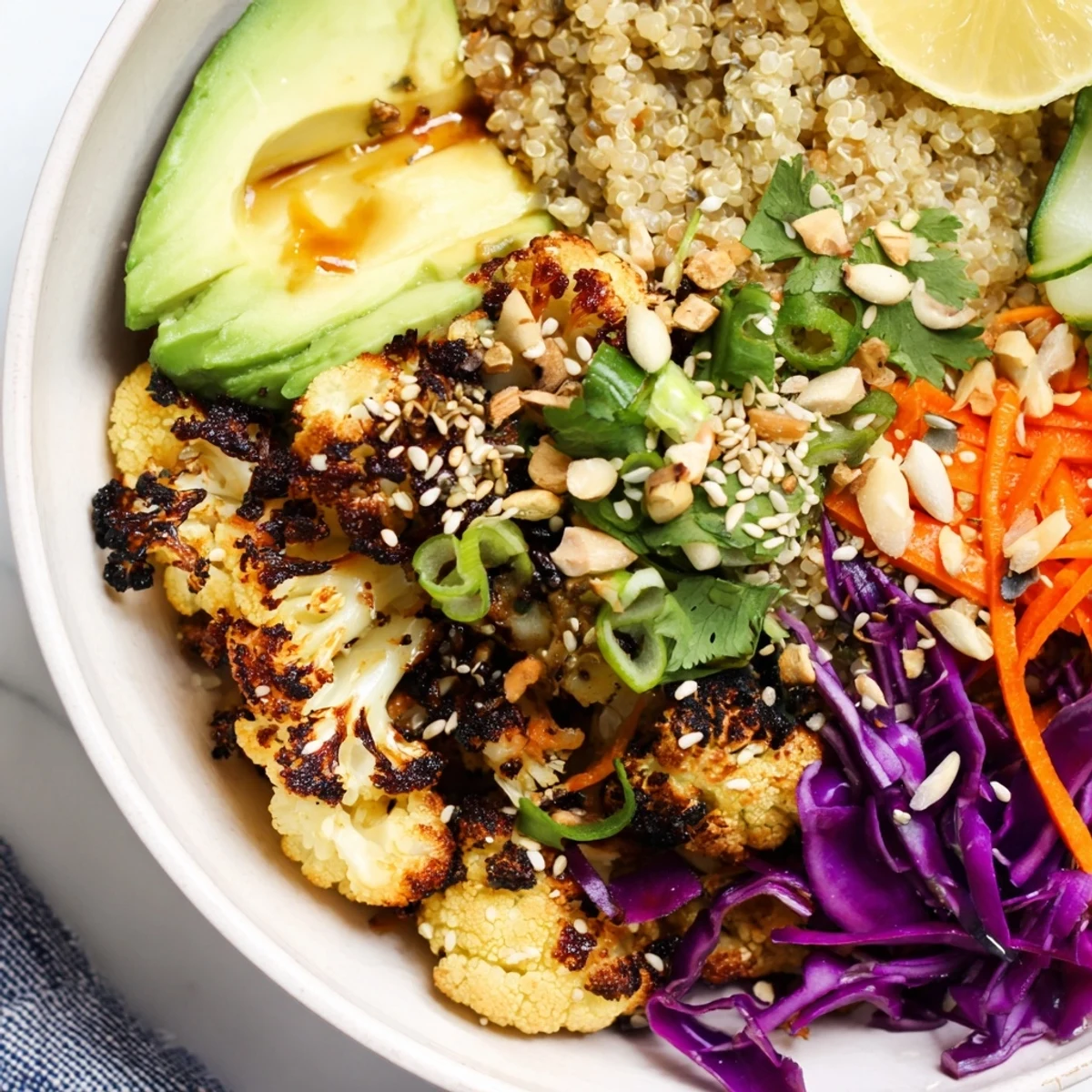
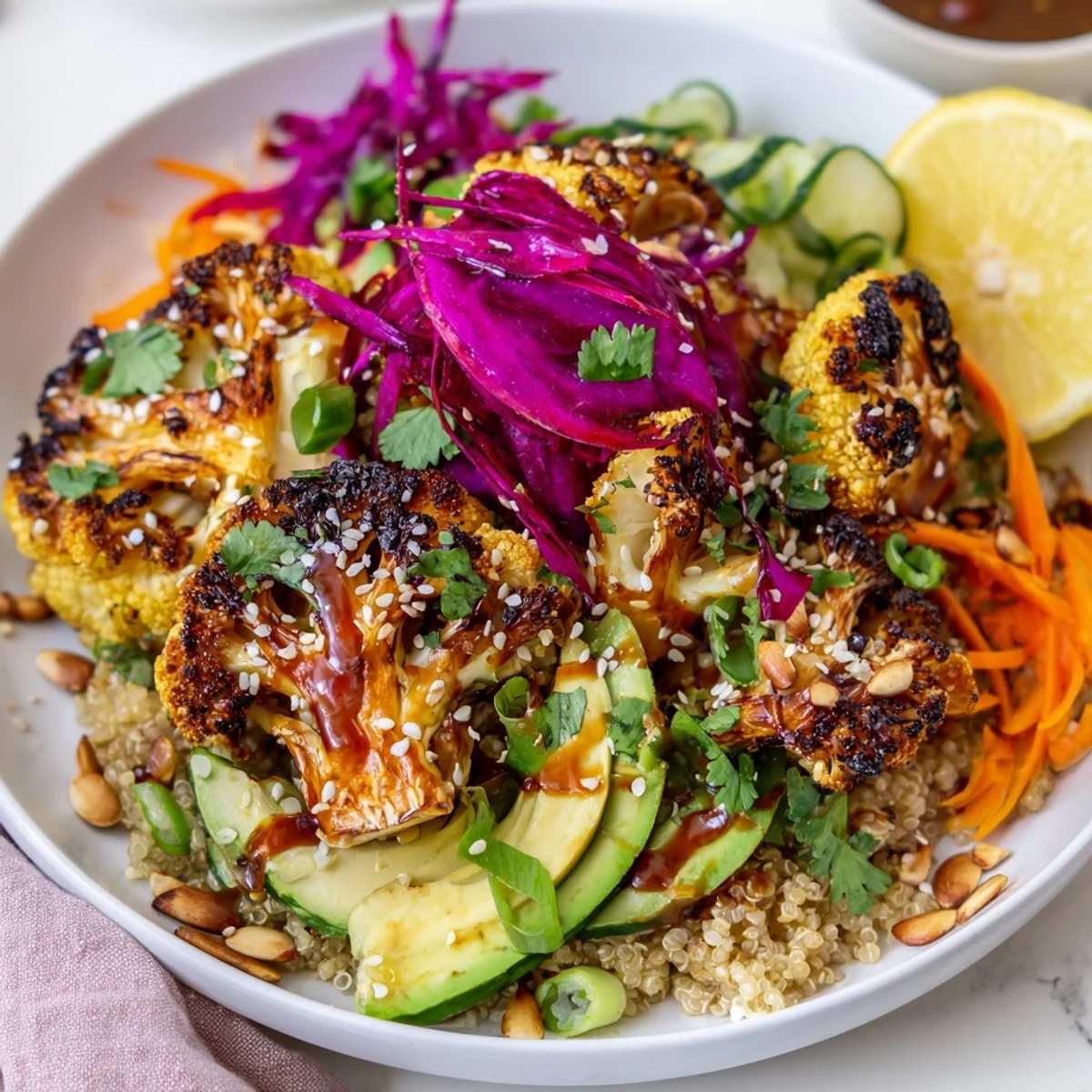
Save This roasted cauliflower miso quinoa bowl brings together deeply caramelized oven-roasted cauliflower florets with fluffy white miso-infused quinoa for a hearty, nutrient-packed base.
Layered with julienned carrots, crisp red cabbage, cool cucumber, and creamy avocado, each bowl delivers a satisfying mix of textures and fresh flavors.
The sesame crunch topping—made from toasted seeds, sliced almonds, tamari, and maple syrup—adds an irresistible caramelized finish. A tangy ginger-miso dressing ties everything together beautifully.
The smell of cauliflower turning deeply golden in a hot oven is one of those quiet kitchen rewards that makes the whole house feel cared for, and this bowl was born on a Sunday when I had nothing planned and a head of cauliflower staring me down. I pulled together whatever was in the pantry, and the miso quinoa happened almost by accident when I stirred a spoonful of paste into still warm grains and tasted something magical.
I brought this to a potluck where a friend who claims to hate cauliflower went back for seconds, and that small victory still makes me grin every time I roast a new batch.
Ingredients
- Cauliflower (1 large head): The real star here so pick one that feels heavy for its size with tightly packed florets and no brown spots.
- Olive oil (2 tbsp): A good quality oil makes a noticeable difference when roasting at high heat so do not skip this detail.
- Sea salt and black pepper: Seasoning the cauliflower before roasting draws out moisture and helps those edges get beautifully caramelized.
- Quinoa (1 cup, rinsed): Rinsing removes the bitter saponin coating and is a step you should never skip no matter how rushed you feel.
- White miso paste (3 tbsp total): Split between the quinoa and the dressing, this brings a deep umami backbone that ties every element of the bowl together.
- Rice vinegar (2 tbsp total): Adds a gentle brightness that keeps the richness of the miso and sesame oil from feeling heavy.
- Mixed seeds and sliced almonds: A combination of sesame, sunflower, and pumpkin seeds gives varied crunch and looks beautiful scattered on top of the finished bowl.
- Tamari or soy sauce (1 tbsp): Use tamari to keep this gluten free and regular soy sauce works fine if that is not a concern for you.
- Maple syrup (2 tbsp total): A touch of sweetness balances the saltiness of the miso and tamari perfectly without being cloying.
- Carrot, red cabbage, cucumber, and green onions: These raw vegetables bring color, freshness, and a satisfying crisp texture that contrasts the warm grains and roasted cauliflower.
- Avocado (1, sliced): Creamy slices of ripe avocado make everything feel more indulgent and satisfying.
- Fresh cilantro and toasted sesame seeds: Finish with these for a bright herbal note and an extra layer of nutty sesame flavor.
- Sesame oil (1 tbsp): Just a little toasted sesame oil in the dressing goes a long way so measure carefully and do not be tempted to add more.
- Grated ginger (1 tsp): Fresh ginger adds a gentle warmth to the dressing that dried ginger simply cannot replicate so please use fresh.
- Lemon or lime wedges: A squeeze of citrus at the end wakes up every flavor on the plate and pulls the whole bowl together.
Instructions
- Roast the cauliflower:
- Preheat your oven to 425 degrees F and line a baking sheet with parchment paper. Toss the florets with olive oil, salt, and pepper until evenly coated, then spread them out without crowding so every piece can develop those gorgeous golden edges during 25 to 30 minutes of roasting, flipping once halfway through.
- Cook the quinoa:
- Bring rinsed quinoa and water to a boil in a saucepan, then drop the heat to low, cover it, and let it simmer gently for 15 minutes until the water disappears. Let it rest off the heat for 5 minutes before fluffing with a fork and stirring in a tablespoon each of miso paste and rice vinegar while the grains are still warm so they absorb all that savory flavor.
- Make the sesame crunch:
- Toast the mixed seeds and sliced almonds in a dry skillet over medium heat for 2 to 3 minutes until you can smell them, then pour in the tamari and maple syrup and stir like your life depends on it for about a minute until everything is coated and lightly caramelized. Scrape it onto a plate immediately because it hardens fast and you do not want it stuck to your pan.
- Whisk the miso dressing:
- Combine miso paste, water, rice vinegar, sesame oil, maple syrup, and grated ginger in a small bowl and whisk until completely smooth. Add a splash more water if you prefer a thinner dressing that drizzles easily over the bowl.
- Build your bowls:
- Divide the warm miso quinoa among four bowls and arrange roasted cauliflower, julienned carrot, sliced red cabbage, cucumber, green onions, avocado, and cilantro on top in whatever pattern makes you happy. Drizzle generously with the miso dressing, scatter the sesame crunch and toasted sesame seeds over everything, and serve with wedges of lemon or lime on the side.
 Save
Save The first time I sat down with one of these bowls on a quiet evening, the combination of textures made me close my eyes and just chew, and I realized this was the kind of meal that makes eating at home feel like a genuine pleasure rather than a chore.
Variations That Work Beautifully
Toss a can of drained chickpeas or cubes of pressed firm tofu onto the baking sheet alongside the cauliflower during the last fifteen minutes of roasting and you have a heartier bowl that stands up to even the biggest appetite. Brown rice makes a fine substitute for quinoa if that is what you have, though you will want to increase the miso slightly since rice absorbs flavor differently than quinoa does.
What to Serve Alongside
A glass of crisp Sauvignon Blanc alongside this bowl is genuinely lovely because the bright acidity of the wine echoes the citrus squeeze at the end and cuts through the richness of the avocado and sesame oil. A simple miso soup or a small side of edamame also rounds out the meal without competing with all the textures already happening in the bowl.
Getting Ahead and Storing Smart
Each component stores separately in the refrigerator for up to four days, which means you can roast the cauliflower, cook the quinoa, whisk the dressing, and make the sesame crunch on Sunday and assemble fresh bowls all week long without any loss in quality or flavor.
- Keep the sesame crunch in a small jar at room temperature so it stays crispy rather than softening in the fridge.
- Store the avocado pit in the container with sliced avocado to slow down browning.
- Always assemble bowls just before eating so the raw vegetables stay crisp and the warm elements do not cool down.
 Save
Save This bowl is proof that a handful of humble ingredients treated with a little care can become something you actually crave, and I hope it finds its way into your regular rotation the way it has mine.
Recipe FAQs
- → Can I make the miso quinoa ahead of time?
-
Yes, the miso quinoa can be cooked up to 3 days in advance and stored in an airtight container in the refrigerator. Reheat gently before assembling your bowls, and the miso flavor will continue to develop over time.
- → What can I substitute for cauliflower?
-
Broccoli florets work as a direct substitute with similar roasting times. You could also try roasted sweet potato cubes, Brussels sprouts, or a mix of root vegetables like parsnips and carrots for a different flavor profile.
- → How do I store leftover sesame crunch topping?
-
Store the sesame crunch in an airtight container at room temperature for up to one week. Keep it away from moisture to maintain its crispiness. It also makes a great topping for salads, soups, and stir-fries.
- → Is white miso paste necessary or can I use another variety?
-
White miso paste is preferred here for its mild, slightly sweet flavor that complements the dish without overpowering it. Red or brown miso can be used but will produce a stronger, saltier taste—use about half the amount and adjust to your preference.
- → How do I add more protein to this grain bowl?
-
Crispy baked tofu, pan-seared tempeh, or roasted chickpeas are excellent plant-based protein additions. You could also top with a soft-boiled or fried egg. Edamame beans are another quick option that pairs well with the Asian-inspired flavors.
- → Can I use a different grain instead of quinoa?
-
Absolutely. Brown rice, farro, millet, or buckwheat all work well as a base. Adjust cooking times and liquid ratios according to your chosen grain, and stir in the miso paste and rice vinegar while the grain is still warm for the best flavor absorption.