
 Save
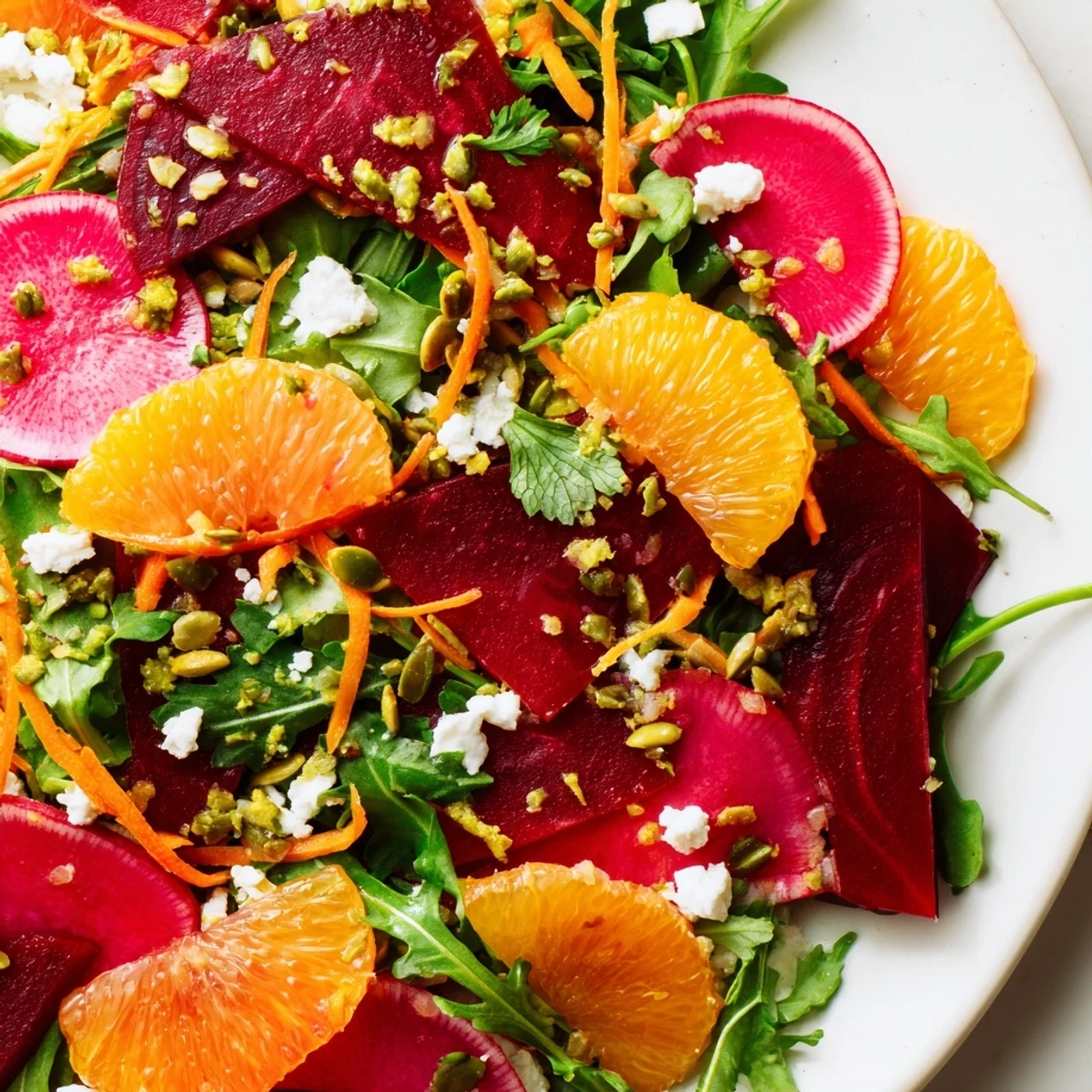
Save This vibrant salad combines julienned beet, carrot, and watermelon radish with zesty orange, grapefruit, and lemon zest. Mixed with fresh baby greens and parsley, it's dressed in a light olive oil and lemon dressing sweetened with honey or maple syrup and accented by Dijon mustard. Toasted pumpkin seeds and optional crumbled feta add texture and richness. Perfect for a light lunch or a colorful side, this dish is quick to prepare and offers a balance of earthy, tangy, and fresh flavors.
For variations, consider omitting feta for a vegan option or adding avocado or roasted chickpeas for creaminess and protein. Serve immediately to maintain crispness and freshness.
There's a farmer's market near my place where the colors alone make you want to cook something bright. One Saturday, I came home with a pile of jewel-toned beets, carrots that still had soil clinging to them, and these watermelon radishes that looked almost too pretty to cut. I threw together what felt right in that moment—greens, citrus, a whisper of mustard in the dressing—and somehow it became the salad I find myself making over and over.
I made this for a lunch with my friend who'd been stuck in meetings all week, and watching her fork into those bright layers, breathing in the citrus—something shifted in her shoulders. She got quiet for a moment, then looked up and laughed. That's the thing about a salad like this; it doesn't just feed your stomach, it reminds you that simple food can be genuinely delicious.
Ingredients
- Beets: Their earthiness anchors the whole dish; julienne them thin so they stay tender and pick up the dressing without overpowering everything else.
- Carrot: Adds a natural sweetness and that satisfying snap; keep your knife steady and your pieces even so they cook into the salad evenly.
- Watermelon radish: The real showstopper—those rings are pure magic on a plate, and they stay crisp longer than you'd think.
- Orange and pink grapefruit: The citrus is your backbone here; the brightness cuts through the earthiness and keeps everything feeling alive.
- Lemon zest: Don't skip this; it adds a floral, concentrated brightness that makes people ask what that flavor is.
- Mixed baby greens: Arugula gives you peppery notes, spinach brings tenderness, lettuce keeps it gentle—mix whatever you have on hand.
- Fresh parsley: A herb that doesn't shout but whispers; it softens the intensity and adds a grassy freshness.
- Extra virgin olive oil: This is where quality matters; cheap oil will make the whole thing taste flat and thin.
- Fresh lemon juice: Always squeeze it yourself; bottled juice tastes a little hollow next to fresh fruit.
- Honey or maple syrup: Just enough sweetness to balance the acidity and make the dressing feel complete.
- Dijon mustard: The emulsifier and the backbone of your dressing; it holds everything together and adds a gentle sharpness.
- Pumpkin seeds: Toast them yourself if you can; the smell alone is worth it, and they stay crunchier that way.
- Feta cheese: Optional but worth the choice; a small handful goes a long way and adds a salty, tangy note.
Instructions
- Prep your roots with intention:
- Get your beet, carrot, and watermelon radish ready—I use a mandoline when I'm feeling confident, but a sharp knife and a steady hand work just as well. Toss them into a large bowl and let them sit for a minute; sometimes the knife work is its own meditation.
- Bring in the citrus:
- Segment your orange and grapefruit carefully—work over a bowl so you catch the juice—and sprinkle in that bright lemon zest. The juice pooling at the bottom of the bowl is liquid gold; pour some of it over the roots.
- Introduce the greens:
- Wash and dry your baby greens thoroughly; they should feel almost crisp in your hands. Tear the parsley into rough pieces and add everything to the bowl with a gentle hand.
- Build your dressing:
- In a small bowl, whisk together the olive oil, lemon juice, honey, and mustard until it looks glossy and slightly thickened. Taste it—it should make your mouth water a little, and then season it with salt and pepper until it feels right.
- Marry it all together:
- Pour the dressing over the salad and toss with a light touch; you want everything coated but not crushed. Do this just before serving so the greens stay bright and crisp.
- Plate and garnish:
- Transfer to a serving platter or individual bowls, then scatter over those toasted pumpkin seeds and a pinch of feta. Serve right away while everything still feels alive.
 Save
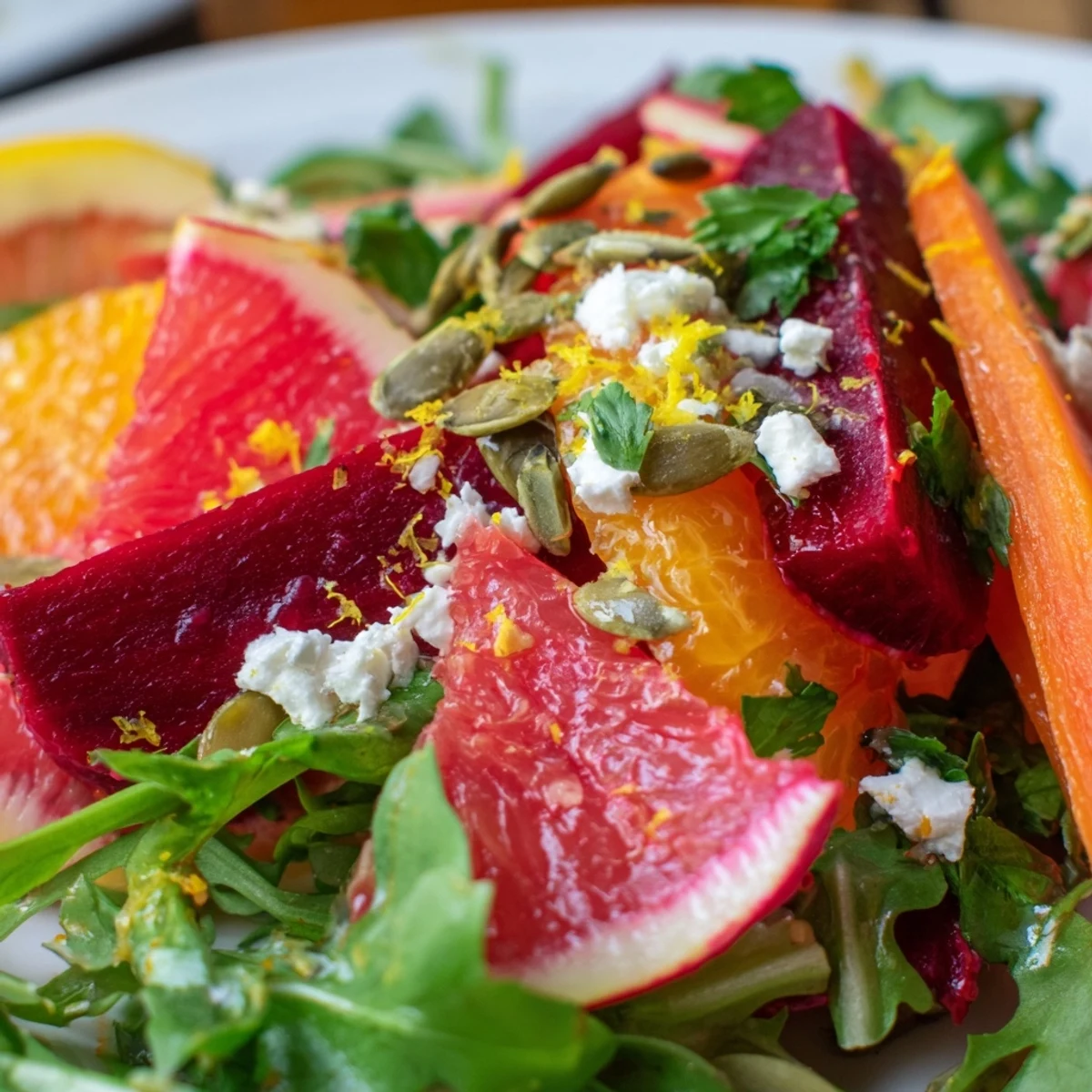
Save There's a moment in every good salad where you toss everything together and step back to look at it—the colors, the textures, the smell of citrus and olive oil rising up—and you realize you've made something that feels almost too beautiful to eat. Almost.
Why This Works As a Side Dish
I've served this alongside grilled fish, roasted chicken, and even simple white beans, and it never competes with what's next to it; instead, it makes everything taste better. The brightness cuts through richness, the crunch contrasts with soft proteins, and the acidity cleanses your palate between bites. It's the kind of salad that disappears from the plate because people keep reaching for just one more forkful.
Making It Your Own
This recipe is more of a framework than a rule. If you don't have pink grapefruit, try blood orange or tangerine; if watermelon radish isn't in the market, thinly sliced regular radish brings the same crunch. Some days I add thin slices of avocado for creaminess, other times a handful of roasted chickpeas when I want more substance without losing the lightness. The dressing stays the same, and the core idea stays intact—earth, brightness, greens, and the sound of a knife against a cutting board on a good day.
Small Moments in the Kitchen
The best part of making this salad is the moment right after you've julienned all your vegetables and before you've assembled anything—your cutting board is a landscape of color, and you're standing there knowing exactly what comes next. There's no stress, no guessing, just quiet satisfaction.
- If your greens feel limp, a quick ice bath brings them back to life before you build your salad.
- Toasting your own pumpkin seeds in a dry pan takes four minutes and changes everything about the crunch and flavor.
- Leftovers keep best if you store the salad and dressing completely separate and only combine what you'll eat right then.
 Save
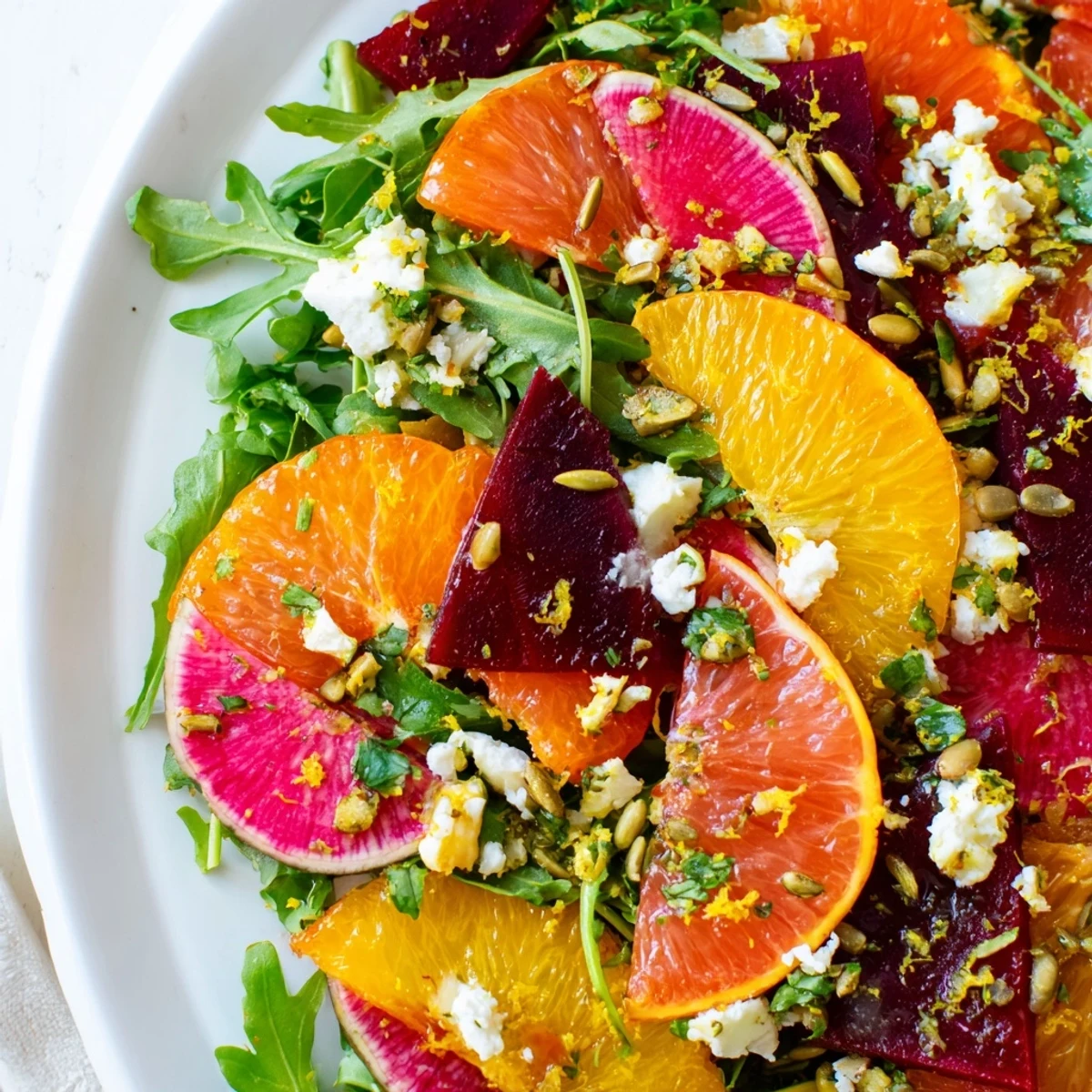
Save This salad asks very little of you and gives back everything—color, freshness, that feeling of eating something alive. Make it when you want to remember that the best meals don't need to be complicated.
Recipe FAQs
- → What root vegetables are best for this salad?
-
Julienned beet, carrot, and thinly sliced watermelon radish provide a crunchy, earthy base with vibrant colors.
- → How do the citrus elements enhance the dish?
-
Orange, grapefruit segments, and lemon zest add bright, tangy notes that balance the earthy roots and enrich the flavor profile.
- → Can the dressing be adjusted for different tastes?
-
Yes, the dressing combines olive oil, lemon juice, honey or maple syrup, and Dijon mustard for a delicate balance but can be tweaked by adjusting sweetness or acidity.
- → Is it possible to prepare this salad in advance?
-
It's best to dress the salad just before serving to preserve the crispness of the vegetables and greens.
- → What are suitable garnishes to complement the flavors?
-
Toasted pumpkin seeds add crunch and nuttiness, while optional crumbled feta lends a creamy, tangy contrast.
- → Can this be adapted for different diets?
-
Yes, omitting feta makes it vegan; adding avocado or roasted chickpeas can increase creaminess and protein content.