
 Save
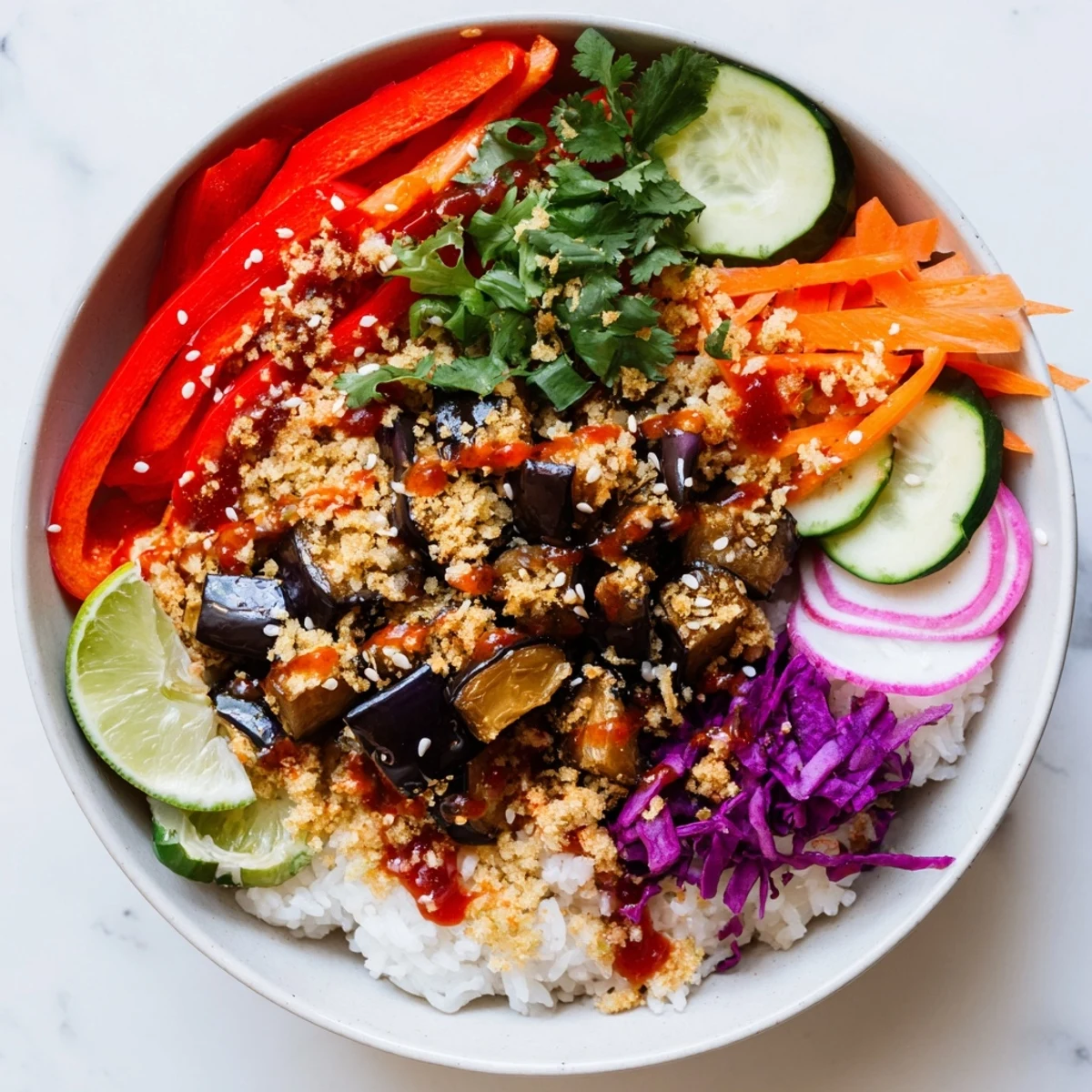
Save This vibrant Korean-inspired vegetarian bowl combines tender roasted eggplant cubes glazed with a spicy-sweet gochujang sauce, creating an irresistible umami-rich flavor profile. The eggplant roasts until golden and caramelized, perfectly complemented by crisp vegetables like bell pepper, carrots, cucumber, and radishes. Fluffy jasmine rice provides a neutral base, while homemade sesame crunch made from toasted panko and sesame seeds adds satisfying texture in every bite.
The customizable bowl works beautifully for meal prep and adapts easily to different dietary needs. Add protein like soft-boiled eggs or tofu, substitute brown rice or quinoa, or adjust the heat level to your preference. The finish of fresh herbs, extra sesame seeds, and lime wedges brightens each serving.
The sizzle of eggplant hitting a scorching baking sheet is one of those sounds that instantly makes my kitchen feel alive. I stumbled into this gochujang bowl on a rainy Tuesday when the fridge offered nothing but a lone eggplant and half a jar of Korean chili paste. Twenty minutes of prep and a whole lot of faith later, I was scooping up the best thing I had eaten all week. That sticky, crimson glazed eggplant perched over fluffy rice with a shower of crunchy sesame panko became an instant obsession.
My neighbor Karen knocked on my door the evening I was testing this recipe, presumably to complain about music volume. She walked in, spotted the sheet pan of glistening eggplant, and ended up staying for dinner with zero complaints. We sat on the floor around my coffee table because I had not cleaned the dining room, and she ate two full bowls without coming up for air. Now she texts me every week asking when I am making it again.
Ingredients
- 2 medium eggplants, cubed into 1 inch pieces: Salting them for ten minutes draws out bitterness and helps them soak up the glaze like sponges.
- 1 red bell pepper, thinly sliced: Adds a crisp sweetness that cools the spice between bites.
- 1 cup shredded carrots: Shred them on the large holes of a box grater for the best noodle like texture.
- 1 cup cucumber, thinly sliced: English cucumbers work best because you skip the seeding step.
- 4 radishes, thinly sliced: Their peppery bite is a quiet surprise that makes this bowl feel complete.
- 2 scallions, sliced: Scatter these on last so their sharpness stays bright and fresh.
- 3 tbsp gochujang: This fermented Korean chili paste is the soul of the dish, so buy a good quality tub.
- 2 tbsp soy sauce: Provides the salty umami backbone that balances the sweetness.
- 1 tbsp rice vinegar: A splash of acid lifts everything and keeps the glaze from feeling heavy.
- 1 tbsp toasted sesame oil: Just a tablespoon adds an incredible nutty aroma that wafts through the whole kitchen.
- 1 tbsp honey or maple syrup: Maple syrup keeps this fully plant based without losing the sticky caramel quality.
- 2 garlic cloves, minced: Fresh garlic mashed into the glaze gives a pungent kick that powder never replicates.
- 1 tsp grated fresh ginger: Microplane it directly into the glaze so none of those aromatic oils escape.
- 1/2 cup panko breadcrumbs: These are the secret to that addictive crunchy topping everyone will ask about.
- 2 tbsp sesame seeds: Toasting them in the panko mixture deepens their flavor tenfold.
- 2 tbsp neutral oil: Canola or sunflower oil works great for crisping the panko without burning.
- 2 cups cooked jasmine or short grain rice: Short grain rice gives that satisfying chewy stickiness that grabs onto the glaze.
- Lime wedges and fresh herbs for garnish: A final squeeze of lime brightens the whole bowl in a way nothing else can.
Instructions
- Fire up the oven:
- Preheat to 425 degrees F and line a large baking sheet with parchment paper so nothing sticks and cleanup is effortless.
- Glaze and roast the eggplant:
- Toss the cubed eggplant with half the gochujang glaze until every piece is coated in that gorgeous red sauce, then spread them in a single layer with breathing room between each cube. Roast for 25 to 30 minutes, flipping halfway, until the edges caramelize and the insides turn silky and tender.
- Make the sesame crunch:
- While the eggplant roasts, heat oil in a skillet over medium heat and add panko, sesame seeds, and salt, stirring constantly for 2 to 3 minutes until everything turns deeply golden and your kitchen smells like a toast shop.
- Build the bowls:
- Divide warm rice among four bowls, then arrange the roasted eggplant, bell pepper, carrots, cucumber, radishes, and scallions in colorful little clusters over the rice.
- Finish with flair:
- Drizzle the remaining gochujang glaze over everything, shower generously with the sesame crunch and extra toasted sesame seeds, and garnish with herbs and a lime wedge on the side.
 Save
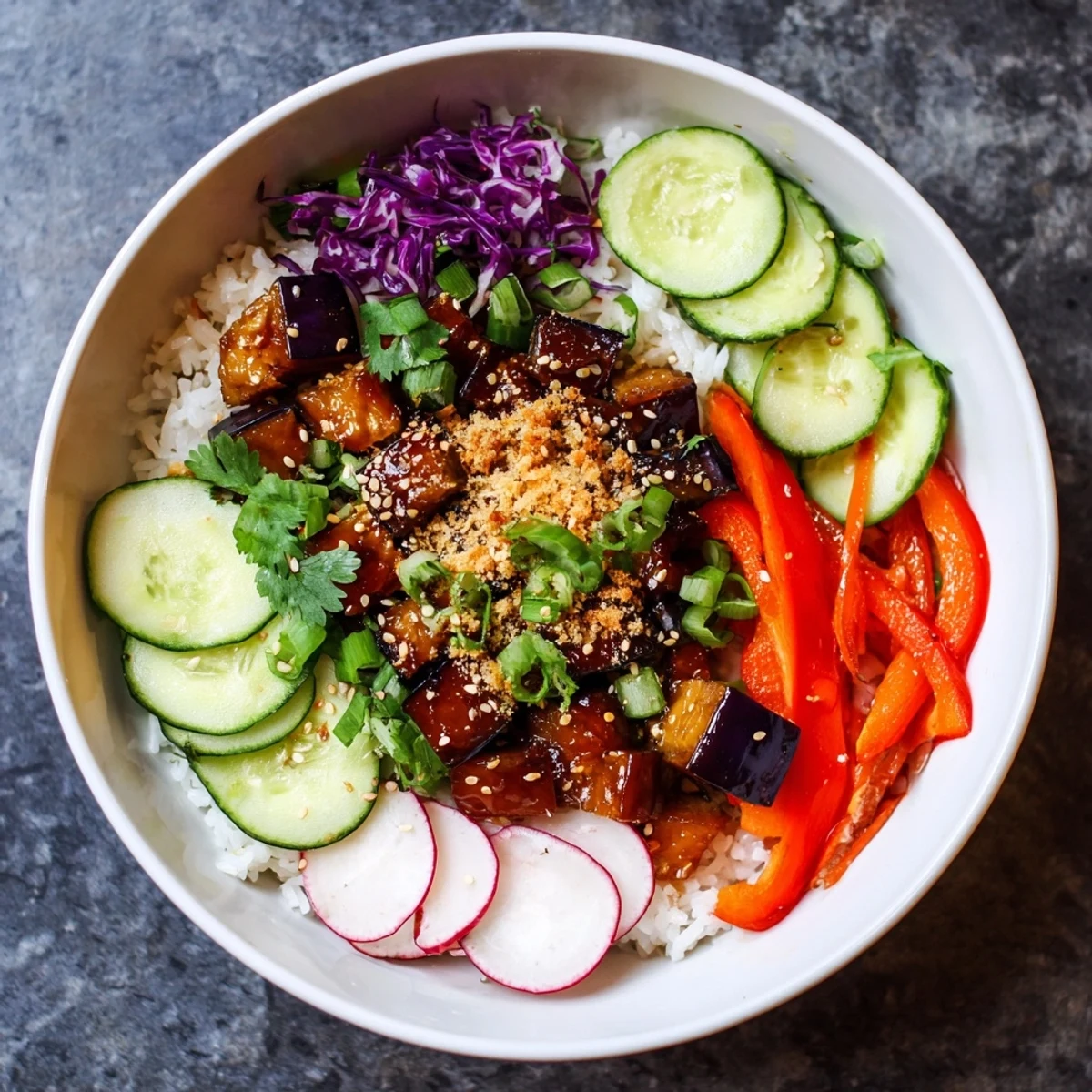
Save I once packed the components of this bowl into mason jars for a picnic and assembled them on a blanket by the lake as the sun went down. My friends stopped mid conversation when they tasted the sesame crunch, and we spent the next ten minutes debating whether it was the best thing I had ever brought to a gathering. That crispy topping has a way of stealing the spotlight from absolutely everything else on the plate.
A Few Words on Eggplant
Not all eggplants are created equal, and I learned this the hard way after buying a massive, seedy one that turned mushy and bitter. Look for smaller, firm eggplants with taut, shiny skin and no soft spots. The fewer seeds inside, the creamier and sweeter your roasted cubes will be.
Making It Your Own
This bowl is a framework, not a rulebook, and I have thrown in roasted sweet potatoes, steamed broccoli, and even leftover roasted chickpeas on desperate weeknights. The gochujang glaze plays well with almost any vegetable you roast, so follow your instincts and use what you have. A soft boiled egg with a jammy yolk nestled into the rice turns this into something truly spectacular.
Leftovers and Reheating
Store each component separately if you want to enjoy this the next day without everything turning into a soggy pile. Reheat the eggplant in a hot oven or air fryer for a few minutes to bring back those crispy caramelized edges.
- Keep the sesame crunch in an airtight jar at room temperature and it stays crisp for up to three days.
- Cold leftover eggplant over fresh rice makes a surprisingly good next day lunch.
- Always make extra glaze because you will want to drizzle it on everything from scrambled eggs to roasted vegetables.
 Save
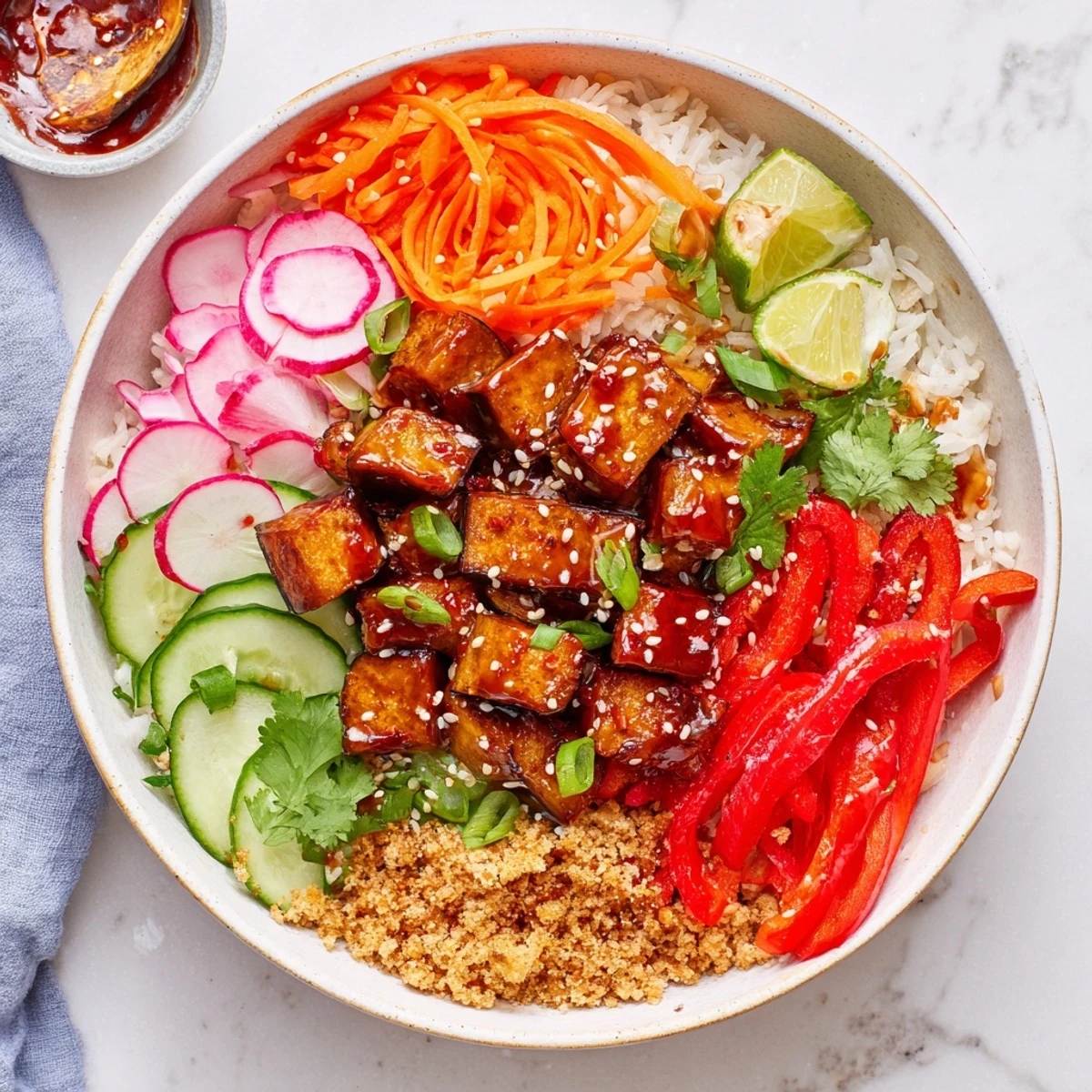
Save Some recipes become staples because they are easy, and others earn their spot because they make you close your eyes on the first bite. This one does both, and I hope it finds its way into your regular rotation the way it found its way into mine.
Recipe FAQs
- → What does gochujang taste like?
-
Gochujang is a Korean fermented chili paste with a complex flavor profile that combines sweet, savory, and spicy elements. It has deep umami notes from fermentation, a slight sweetness from rice malt, and a moderate heat level that builds gradually. The paste adds rich depth to glazes, marinades, and sauces.
- → Can I make this bowl gluten-free?
-
Yes, this bowl adapts easily to gluten-free requirements. Substitute regular soy sauce with tamari or coconut aminos in the gochujang glaze. Replace standard panko breadcrumbs with certified gluten-free panko or crushed rice crackers for the sesame crunch. Always check labels on gochujang brands, as some contain wheat.
- → How do I prevent the eggplant from becoming mushy?
-
Cut eggplant into uniform 1-inch cubes for even cooking. Roast at 425°F (220°C) on a parchment-lined baking sheet, which promotes caramelization. Toss with only half the glaze initially to avoid excess moisture. Flip halfway through roasting. The high heat and proper spacing allow the eggplant to develop golden edges while remaining tender inside.
- → What protein additions work well with this bowl?
-
Soft-boiled eggs with runny yolks create a creamy element when mixed with the gochujang glaze. Crispy pan-fried tofu cubes absorb the spicy sauce beautifully. Edamame adds plant-based protein and color. Grilled chicken or shrimp work for non-vegetarian versions. For a nutty protein boost, add roasted cashews or almonds to the sesame crunch.
- → Can I prepare components in advance?
-
Yes, this bowl is excellent for meal prep. Cook rice up to 3 days ahead and store in the refrigerator. Roast eggplant and store separately for 2-3 days. Prepare the gochujang glaze up to a week in advance. Keep vegetables washed and sliced in containers. Make the sesame crunch fresh for best texture, or store in an airtight container for 2-3 days. Reheat eggplant gently before assembling.
- → How can I adjust the spice level?
-
The heat level is easily customizable. For a milder version, reduce gochujang to 1-2 tablespoons or mix with additional honey or maple syrup. Add a tablespoon of mayo or yogurt to the glaze for creaminess and tempered heat. To increase spice, add Korean chili flakes (gochugaru), sliced fresh chilies, or a dash of sriracha. Always taste and adjust before roasting.