 Save
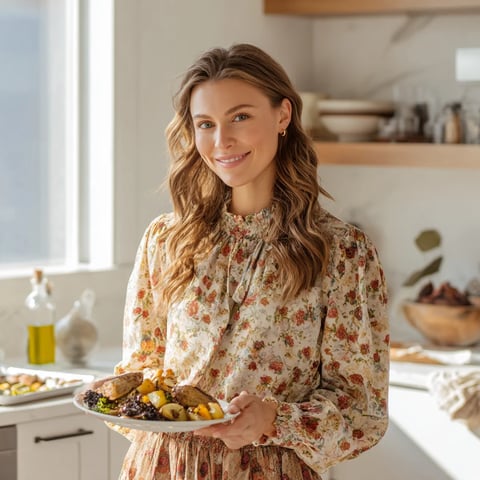
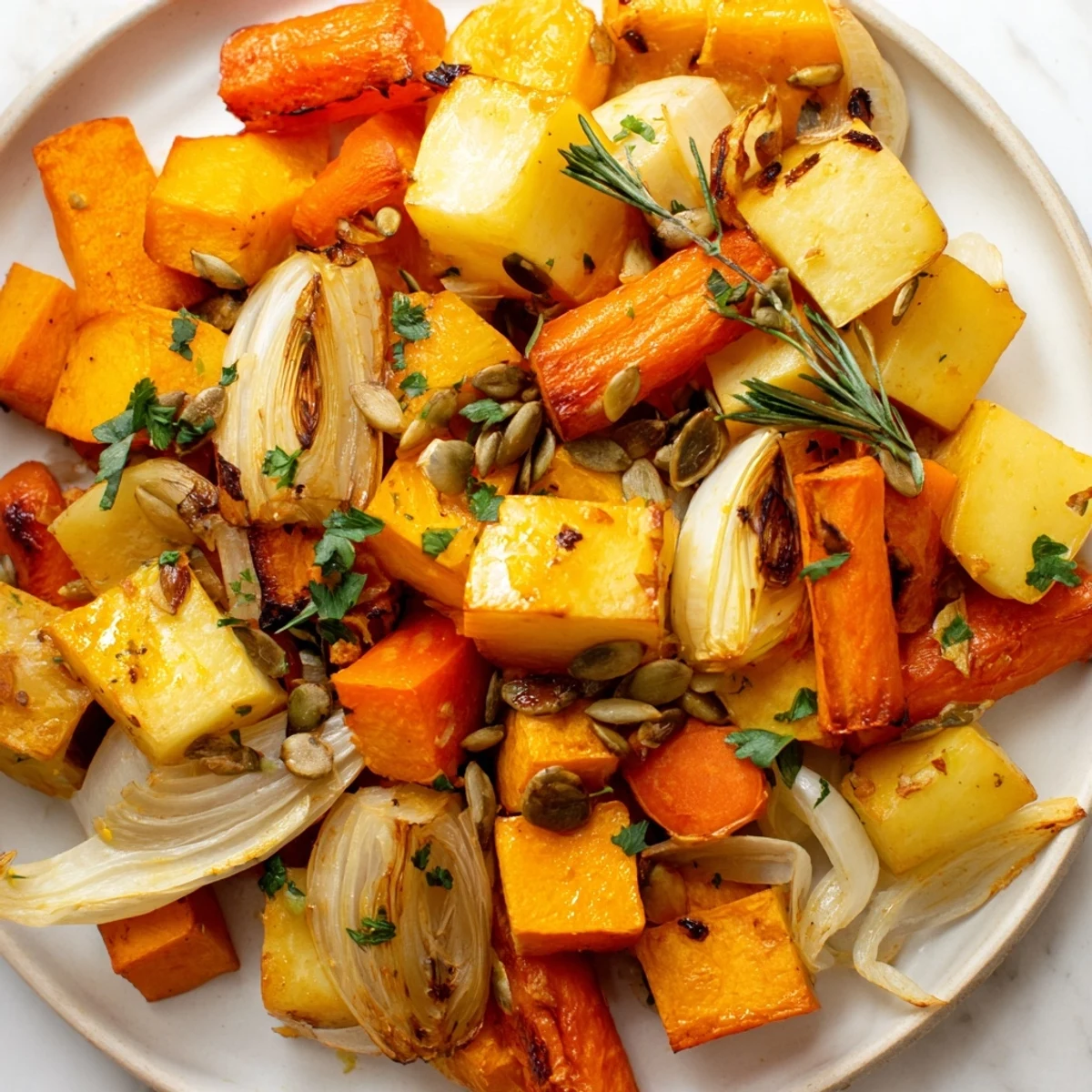
Save This dish features a warm medley of golden winter vegetables like carrots, parsnip, squash, and Yukon Gold potatoes, roasted with aromatic rosemary, thyme, and spices. The vegetables are coated with olive oil and roasted until tender and golden. Optional garnishes like toasted pumpkin seeds and fresh parsley add texture and freshness. Ideal for a comforting main or vibrant side, this vegetarian, gluten-free, and vegan option is easy to prepare and full of seasonal flavors.
There's something about the smell of root vegetables caramelizing in a hot oven that makes everything feel right with the world. I discovered this golden vegetable medley on a grey November afternoon when my pantry was practically bare except for whatever was lurking in the vegetable drawer. What started as a simple solution became the kind of dish I now make whenever I need something warm, honest, and deeply satisfying.
I made this for my sister during her first winter after moving north, when she was convinced she'd never feel warm again. Watching her face light up as she tasted that first forkful, the turmeric adding a gentle warmth that seemed to thaw something inside her, I realized this dish had become more than just dinner—it was comfort translated into flavor.
Ingredients
- Carrots: The sweet foundation that gets even sweeter as they roast; peeling them is optional but it lets them caramelize more evenly.
- Parsnip: Adds an earthy sweetness that deepens in the oven heat; don't skip it just because it looks unfamiliar.
- Butternut squash: The golden star that makes this dish look like autumn in a bowl; cut it into roughly the same size as other vegetables so everything finishes together.
- Yukon Gold potatoes: Their buttery nature means they contribute richness without any added cream, and their thin skin means less peeling work.
- Yellow onion: Wedges keep their shape better than smaller cuts and get charred at the edges in the most delicious way.
- Garlic: Smashing cloves instead of mincing them means they stay intact and become sweet little flavor bombs rather than scattered through the dish.
- Fresh rosemary and thyme: Fresh herbs scatter unevenly and crisp up beautifully, but dried work just fine if that's what you have on hand.
- Olive oil: This is the medium that lets everything brown properly, so don't skimp here.
- Sea salt and black pepper: Season generously; the vegetables will absorb it as they cook.
- Turmeric: The secret ingredient that gives everything a warm golden glow and a subtle earthiness.
- Smoked paprika: Optional but worth it for the depth it adds without any real smokiness.
- Pumpkin seeds and fresh parsley: The final flourish that adds texture and a bright green contrast to all that gold.
Instructions
- Set your oven to its hottest setting:
- Preheat to 425°F and line your baking sheet with parchment paper so nothing sticks and everything gets those crispy, browned edges. A hot oven is non-negotiable for caramelization.
- Build your vegetable base:
- Combine all your prepped vegetables in a large bowl—the mix of roots and alliums is what makes this work. Get them all in there before you add anything else so you can see what you're working with.
- Make the magic happen:
- Drizzle everything with olive oil first, then scatter your salt, pepper, turmeric, paprika, and fresh herbs over the top. Toss it all together until every piece is coated; this is when the aromatics start to wake up and you'll smell what's coming.
- Arrange for even cooking:
- Spread everything in a single layer on your baking sheet with a little space between pieces so they roast rather than steam. Dense vegetables like potatoes should have their flat sides down so they make contact with the hot pan.
- Let the oven do the work:
- Roast for 35 to 40 minutes, turning things over halfway through so the other sides get their moment to caramelize. You'll know it's done when everything has golden-brown edges and is tender enough to pierce easily with a fork.
- Finish with intention:
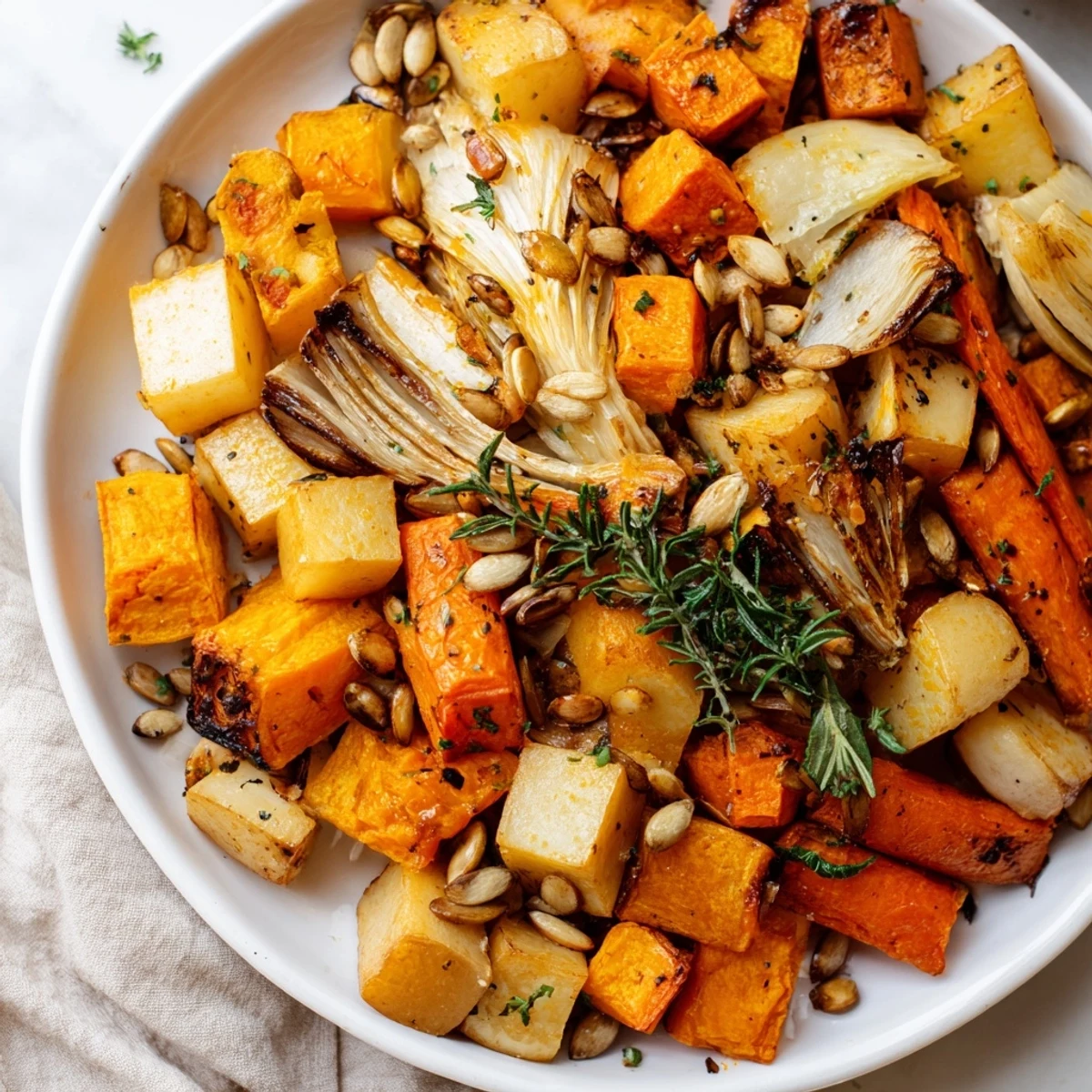
- Transfer to a serving platter and scatter toasted pumpkin seeds and fresh parsley over top if you have them. Serve while everything is still warm enough to release its steam and let the flavors settle into each bite.
 Save
Save The first time someone asked for my recipe was when I brought this to a dinner party where everyone expected something complicated. Watching people go back for seconds of something so simple, so elemental, reminded me that the best dishes aren't about technique or fancy ingredients—they're about respecting what you're cooking and letting flavors shine.
Why Roasting Changes Everything
Roasting isn't just a cooking method; it's a chemical transformation. The high heat breaks down the cell walls of vegetables and concentrates their sugars, which is why a raw carrot tastes nothing like a roasted one. The turmeric and paprika aren't just flavor—they're part of what makes everything look like it was touched by autumn light. Temperature matters because a lukewarm oven produces pale, steamed vegetables, but a properly hot oven gives you color and depth.
Building Flavor Layers
Each vegetable contributes something different to the final dish. The carrots bring straightforward sweetness, the parsnips add earthiness, the squash gives creaminess when it breaks down at the edges, and the potatoes anchor everything with their starch and butter undertones. The aromatics—onion and garlic—become almost unrecognizable, their sharp edges mellowed into caramel-like sweetness. It's why this dish tastes like more than the sum of its parts.
Making It Your Own
This recipe is a foundation, not a strict rule. Golden beets bring earthiness and maintain their vibrant color, sweet potatoes add a different kind of sweetness, and Brussels sprouts get crispy and nutty at the edges. I've made this with whatever was in season or on sale, and it's always worked. The turmeric and paprika are the constants that tie everything together and create that warm, cohesive flavor that makes people ask what your secret is.
- Add a squeeze of fresh lemon juice after roasting to brighten everything and cut through the richness.
- Try it over creamy lentils or quinoa if you want to turn it into a more substantial meal.
- Leftovers taste even better the next day as flavors meld together overnight.
 Save
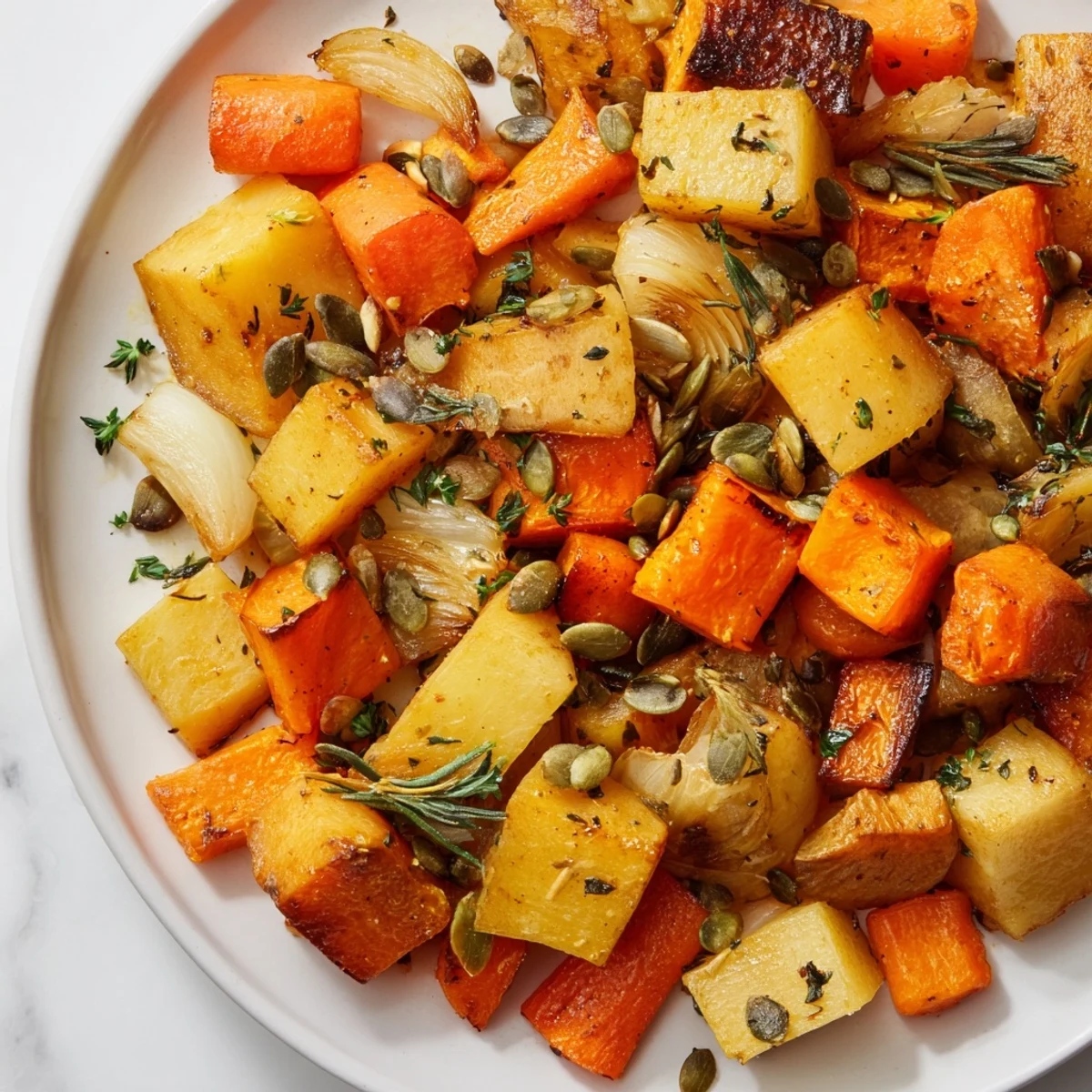
Save This golden medley has become my go-to when I need to feed people something warm and real. It's the kind of dish that makes you feel like you've cooked something worth cooking.
Recipe FAQs
- → What vegetables are used in this dish?
-
It includes carrots, parsnip, butternut squash, Yukon Gold potatoes, yellow onion, and garlic.
- → How do you achieve the golden roasting effect?
-
Coating vegetables with olive oil and roasting at 425°F for 35-40 minutes until tender and browned creates the golden finish.
- → Which herbs enhance the flavor?
-
Fresh or dried rosemary and thyme are used to add aromatic, earthy notes.
- → Can this dish accommodate dietary restrictions?
-
Yes, it is naturally vegetarian, gluten-free, and vegan, and free from common allergens.
- → Are there optional garnishes?
-
Toasted pumpkin seeds and chopped fresh parsley can be sprinkled on top for added texture and color.