
 Save
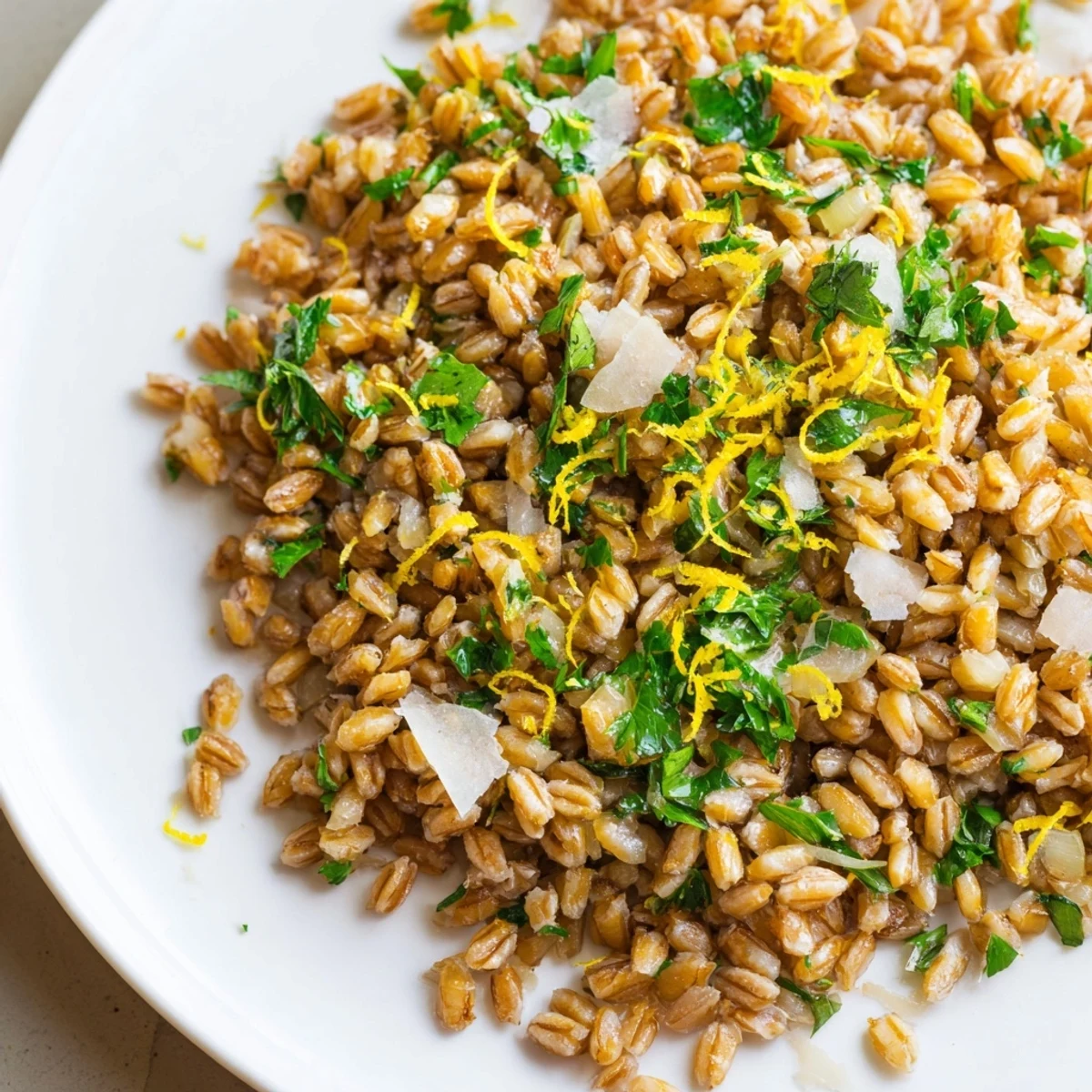
Save This dish features farro toasted to enhance its rich, nutty flavor and chewy texture. Aromatic shallots and garlic infuse warmth, while vegetable broth melds the grains into a tender, satisfying base. Garnishes like fresh parsley, lemon zest, and optional Parmesan add brightness and depth. Versatile as a side or foundation, this Mediterranean-inspired preparation is straightforward and flavorful.
The first time I cooked farro properly was completely by accident—I'd meant to buy barley but grabbed the wrong bag, and ended up toasting these little grains in olive oil until my kitchen smelled like a bakery. That golden, nutty aroma changed everything about how I approach grains now. Something magical happens when you take the time to toast them first, transforming plain chewy kernels into something that feels substantial and comforting.
Last winter I made this for a dinner party when everyone was feeling particularly weary and gray. The warmth of those tender grains, flecked with parsley and hit with lemon zest, seemed to thaw everyone out from the inside. My friend Sarah actually admitted she'd never liked farro until that night, and now she texts me regularly asking if I'm 'making that grain thing' whenever she comes over.
Ingredients
- 1 cup farro (whole or semi-pearled, rinsed): Semi-pearled cooks faster but whole grain has more bite—just adjust your cooking time accordingly
- 2 ½ cups vegetable broth (or water): Low-sodium broth gives you flavor control, but water works if that's what you have
- 2 tablespoons olive oil: This becomes your toasting fat, so use something you actually like the taste of
- 1 small shallot, finely chopped: Shallots bring this gentle sweetness that onions can sometimes overpower
- 1 garlic clove, minced: Fresh is non-negotiable here—it blooms beautifully in the hot oil
- ½ teaspoon sea salt (or to taste): Start light since broth varies so much in sodium content
- ¼ teaspoon freshly ground black pepper: Grind it right before you cook—the pre-ground stuff loses its spark fast
- 2 tablespoons chopped fresh parsley: Brightens up all that warm, toasted richness
- 1 tablespoon grated Parmesan cheese: Totally optional, but that salty umami punch is worth it
- Zest of ½ lemon: This tiny addition wakes up the whole dish
Instructions
- Get your grains ready:
- Rinse your farro under cold water until it runs clear, then shake off the excess moisture
- Toast the farro:
- Heat olive oil in your saucepan over medium heat, add the damp farro, and stir frequently for 4-5 minutes until golden and fragrant
- Build the flavor base:
- Stir in the chopped shallot and minced garlic, cooking for 1-2 minutes until softened and aromatic
- Add the liquid and season:
- Pour in the vegetable broth, add your salt and pepper, and bring everything to a gentle boil
- Simmer until tender:
- Reduce heat to low, cover tightly, and simmer for 25-30 minutes until the farro is tender but still pleasantly chewy
- Finish and serve:
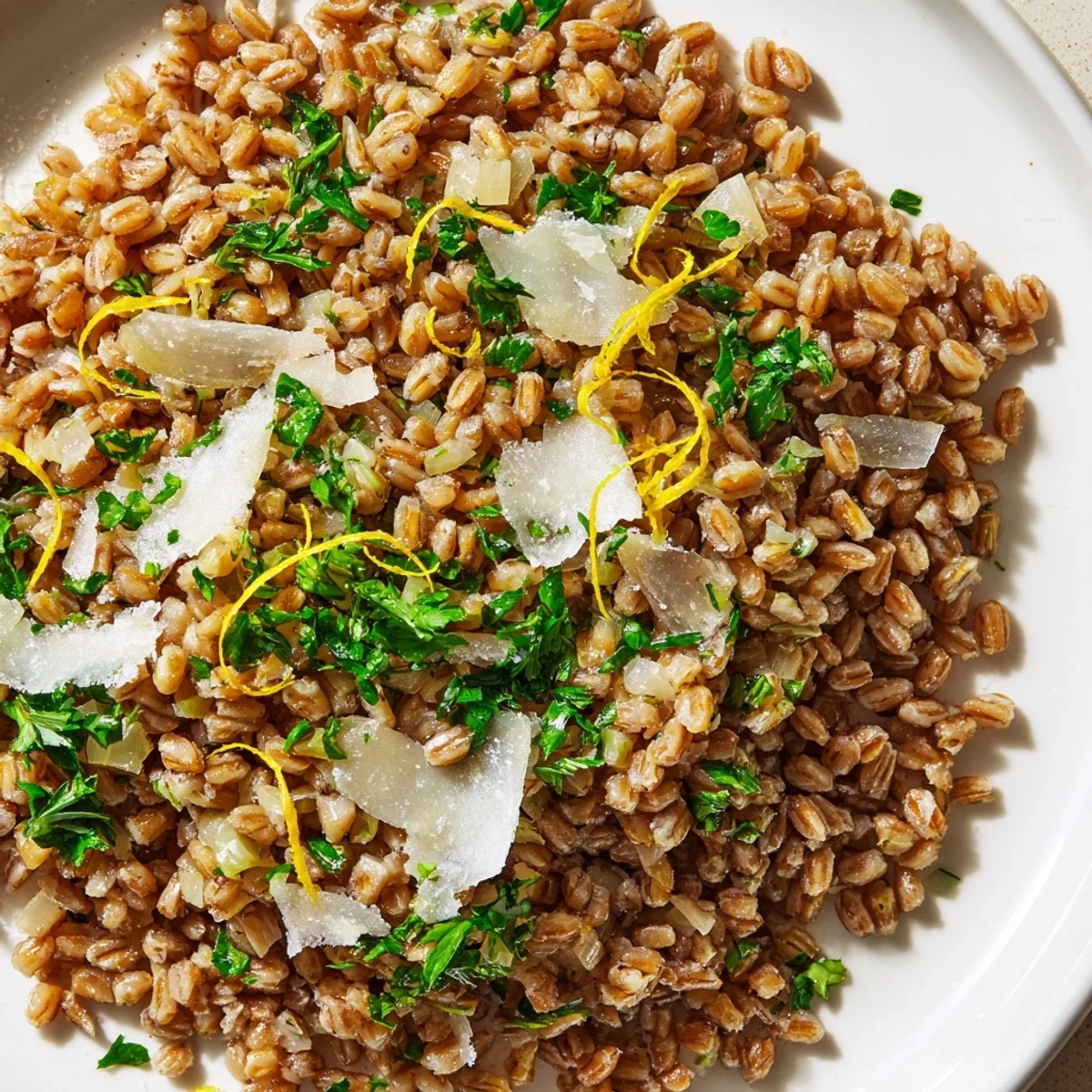
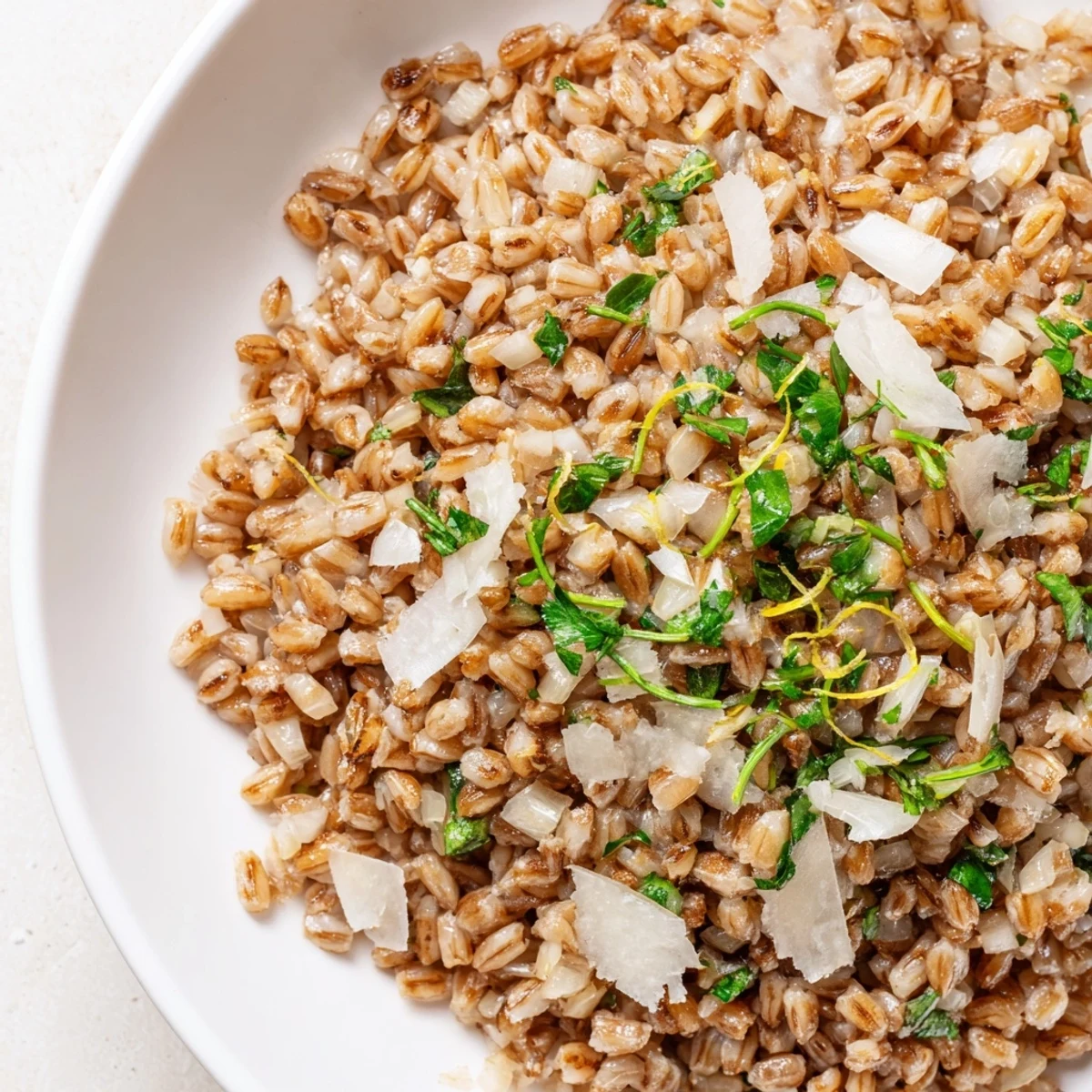
- Drain any excess liquid, fluff with a fork, and top with parsley, Parmesan, and lemon zest if you're feeling fancy
 Save
Save This recipe became my go-to during that stretch of pandemic cooking when simple things felt profound. Something about stirring those toasting grains, watching them turn from pale pearls to golden nuggets, felt like an act of care that extended beyond just feeding people. My youngest started calling it 'the happy grain' and still asks for it whenever comfort food is on the menu.
Making It Your Own
Once you've got the basic technique down, this grain becomes a canvas for whatever you're craving. I've added sautéed mushrooms in autumn, tossed in fresh cherry tomatoes in summer, and even stirred in roasted butternut squash when the weather turns cold. The method stays the same—it's all about what you add after the toasting magic happens.
The Make-Ahead Secret
Farro is one of those rare grains that actually tastes better after it hangs out in the fridge for a day. I'll often make a double batch on Sunday and use it throughout the week—warmed up with a fried egg on top, tossed into salads at room temperature, or even stirred into soup for extra body. The flavors deepen and the texture becomes more satisfying with time.
Serving Ideas
This grain plays nicely with practically everything, but some combinations have become absolute staples in my rotation. It's particularly brilliant underneath roasted vegetables or as a bed for pan-seared salmon, but don't overthink the pairing.
- Try it topped with a poached egg and some chili flakes for breakfast
- Toss leftover cold farro into green salads for extra heft
- Keep a batch prepped in the fridge for instant grain bowls all week
 Save
Save There's something deeply satisfying about a recipe that transforms such humble ingredients into something that feels special. Hope this becomes one of those staples you turn to again and again.
Recipe FAQs
- → What is the best way to toast farro?
-
Toast farro in a dry pan over medium heat, stirring frequently until golden and fragrant, about 4–5 minutes, to enhance its nutty flavor.
- → Can I substitute vegetable broth with water?
-
Yes, water can be used, but vegetable broth adds extra depth and richness to the grains.
- → How do I know when farro is cooked perfectly?
-
Farro is tender yet chewy when most liquid is absorbed and it resists slightly to bite, typically after 25–30 minutes simmering.
- → Can I add variations or additional ingredients?
-
Absolutely; sautéed mushrooms, spinach, or different herbs can complement the farro's texture and flavor nicely.
- → Is Parmesan necessary for this dish?
-
Parmesan adds savory richness but can be omitted or replaced with vegan alternatives to suit dietary preferences.