
 Save
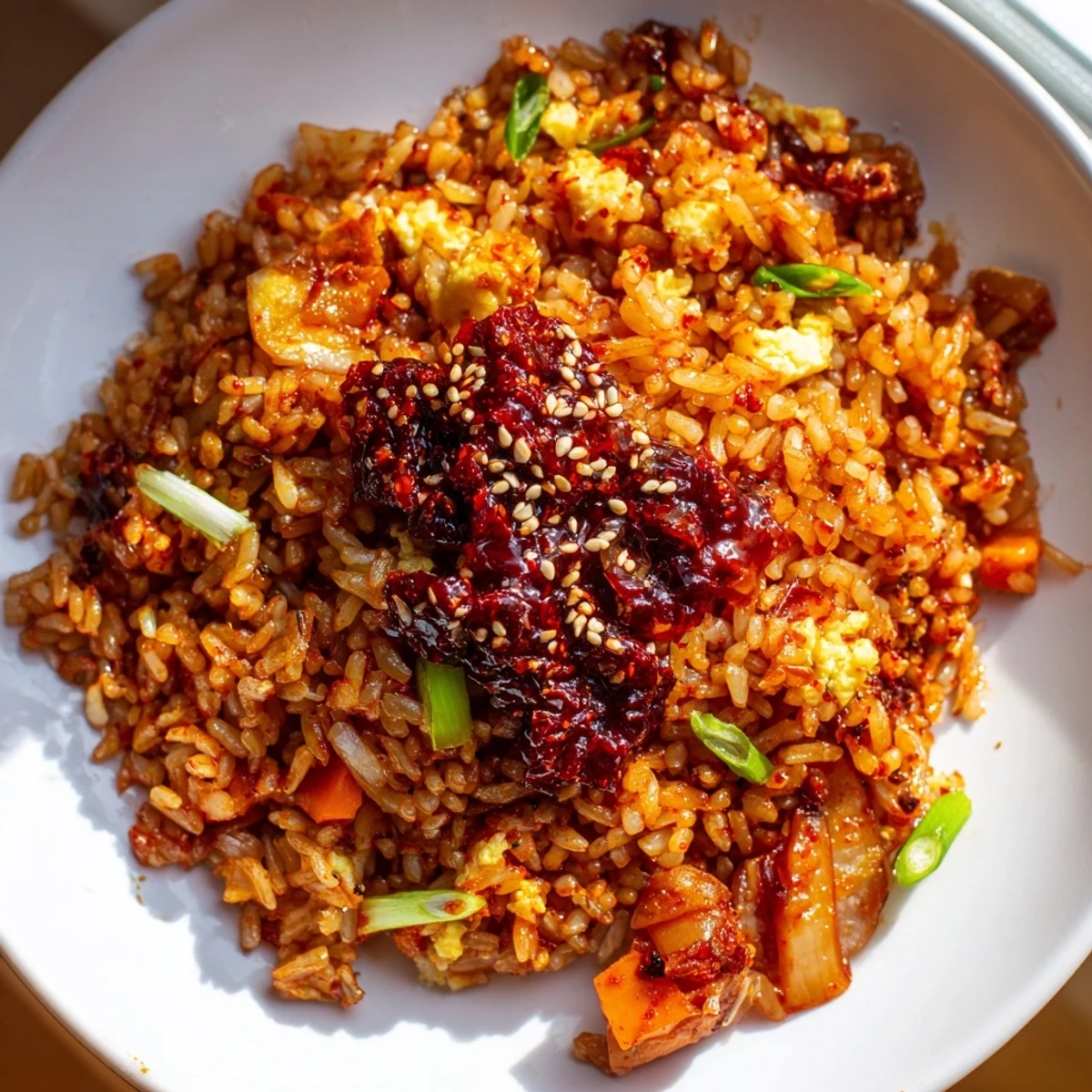
Save Elevate your leftover rice with this vibrant Korean-inspired creation that combines tangy fermented kimchi with addictive chili crisp heat. The magic happens when day-old rice meets the hot wok, developing crispy edges while absorbing the savory blend of kimchi juice, soy sauce, and toasted sesame oil.
Fresh scallions provide a bright counterpoint to the rich, spicy elements, while optional eggs add protein and creamy texture. The entire dish comes together in just 30 minutes, making it perfect for quick weeknight dinners when you want something satisfying without extensive prep.
Best enjoyed immediately while the rice retains its crunch, this versatile bowl welcomes additional vegetables like sautéed mushrooms or edamame for extra nutrition.
The first time I made kimchi fried rice, I was scraping together dinner from a half-empty jar of fermented cabbage and leftover takeout rice. My roommate wandered into the kitchen, drawn by the sharp tang hitting the air, and ended up eating half the batch straight from the wok. Now I keep containers of pre-chopped kimchi in the fridge specifically for those nights when nothing else sounds good.
Last winter, my friend Sarah came over fresh from a breakup, craving something spicy enough to make her forget her ex existed. We doubled the chili crisp, poured cold wine, and stood over the stove taking turns stirring the rice until it hissed and popped. She left with leftovers and a slightly better outlook on life.
Ingredients
- 2 cups cooked jasmine or short-grain rice: Day-old rice from the refrigerator is ideal because the grains dry out slightly, preventing soggy fried rice
- 1 cup chopped kimchi plus 2 tablespoons kimchi juice: Older, more fermented kimchi has deeper flavor and tanginess that infuses the entire dish
- 4 scallions, thinly sliced: Keep the white and green parts separate since whites need time to soften while greens stay fresh
- 2 cloves garlic, minced: Add alongside the aromatics so it mellows into the background rather than burning
- 2 tablespoons chili crisp: The oil and crispy bits are both essential so do not drain before measuring
- 1 tablespoon soy sauce: Adds salt and depth while complementing the fermented flavors
- 1 teaspoon toasted sesame oil: A tiny amount goes a long way so add at the end for maximum aroma
- 2 large eggs: Optional but creamy bits of egg make the dish feel more substantial
- 2 tablespoons neutral oil: Needed to keep rice from sticking and help grains crisp up
Instructions
- Mise en place everything:
- Chop the kimchi, slice your scallions, mince the garlic, and beat the eggs in a small bowl if you are using them. Fried rice moves fast so having everything ready prevents burning.
- Heat the wok:
- Warm 1 tablespoon of neutral oil in a large skillet or wok over medium-high heat until shimmering slightly.
- Build your aromatics:
- Add the scallion whites, garlic, and carrot if using. Stir-fry for 1 to 2 minutes until fragrant and softened.
- Bloom the kimchi:
- Toss in the chopped kimchi and cook for another 2 to 3 minutes, stirring frequently, until it smells incredible and starts to caramelize slightly.
- Scramble the eggs:
- Push everything to one side and add the remaining tablespoon of oil. Pour in the eggs and scramble gently until just set, then fold into the vegetables.
- Add the rice:
- Dump in the cooked rice and stir-fry for 2 to 3 minutes, breaking up clumps with your spatula. Let some grains toast against the hot pan.
- Season everything:
- Drizzle in the kimchi juice, soy sauce, chili crisp, optional gochujang, and sesame oil. Toss until the rice is evenly coated and starting to crisp.
- Finish and serve:
- Cook for 2 more minutes to let flavors meld. Remove from heat and top with scallion greens plus extra chili crisp for serving.
 Save
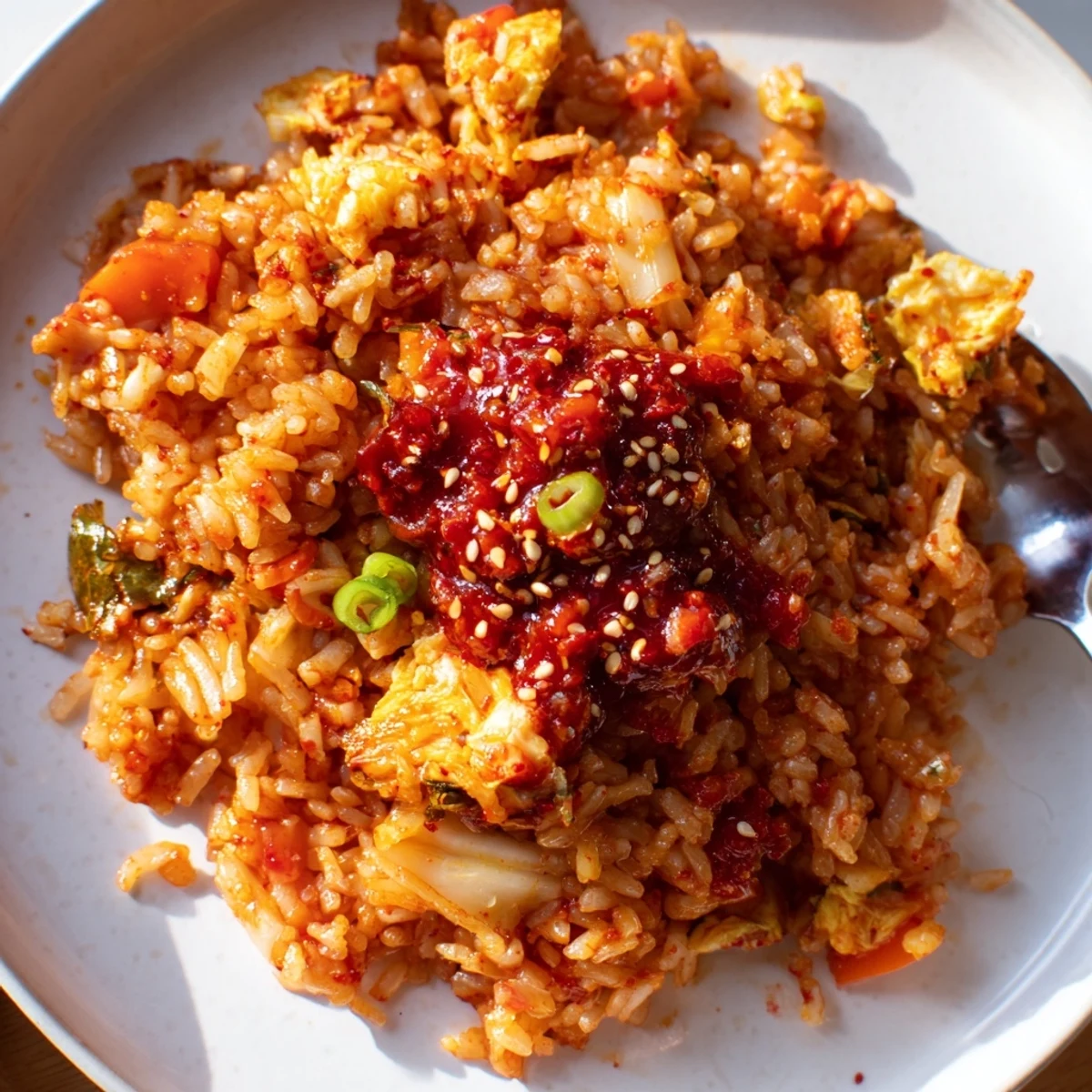
Save This recipe became my go-to emergency meal during grad school when I needed something fast, cheap, and comforting enough to fuel late-night study sessions. Now it is the first thing I offer friends who show up hungry and unannounced.
Making It Your Own
Once you master the basic technique, this recipe becomes a template for whatever needs using up in your refrigerator. I have added corn kernels from summer barbecues, frozen peas when I needed color, and even diced bell peppers from sad CSA boxes. The key is keeping the rice-to-vegetable ratio balanced so every bite still feels substantial.
Protein Variations
Fried rice welcomes protein with open arms. Crispy tofu cubes, shredded rotisserie chicken, or even sliced Spam all work beautifully here. Just add cooked proteins at the very end to warm through, or raw ground meat alongside the aromatics so it has time to brown properly.
Serving Suggestions
A cold lager cuts through the spice and richness while cold green tea refreshes the palate between bites. For a complete meal, pair with cucumber salad dressed in rice vinegar or quick-pickled carrots. Fried rice also works inside warm tortillas as next-level breakfast burritos the next morning.
- Keep extra chili crisp on the table so everyone can adjust heat to their liking
- Squeeze fresh lime over your bowl if the kimchi feels too intense
- Fried eggs on top turn this into dinner in under five additional minutes
 Save
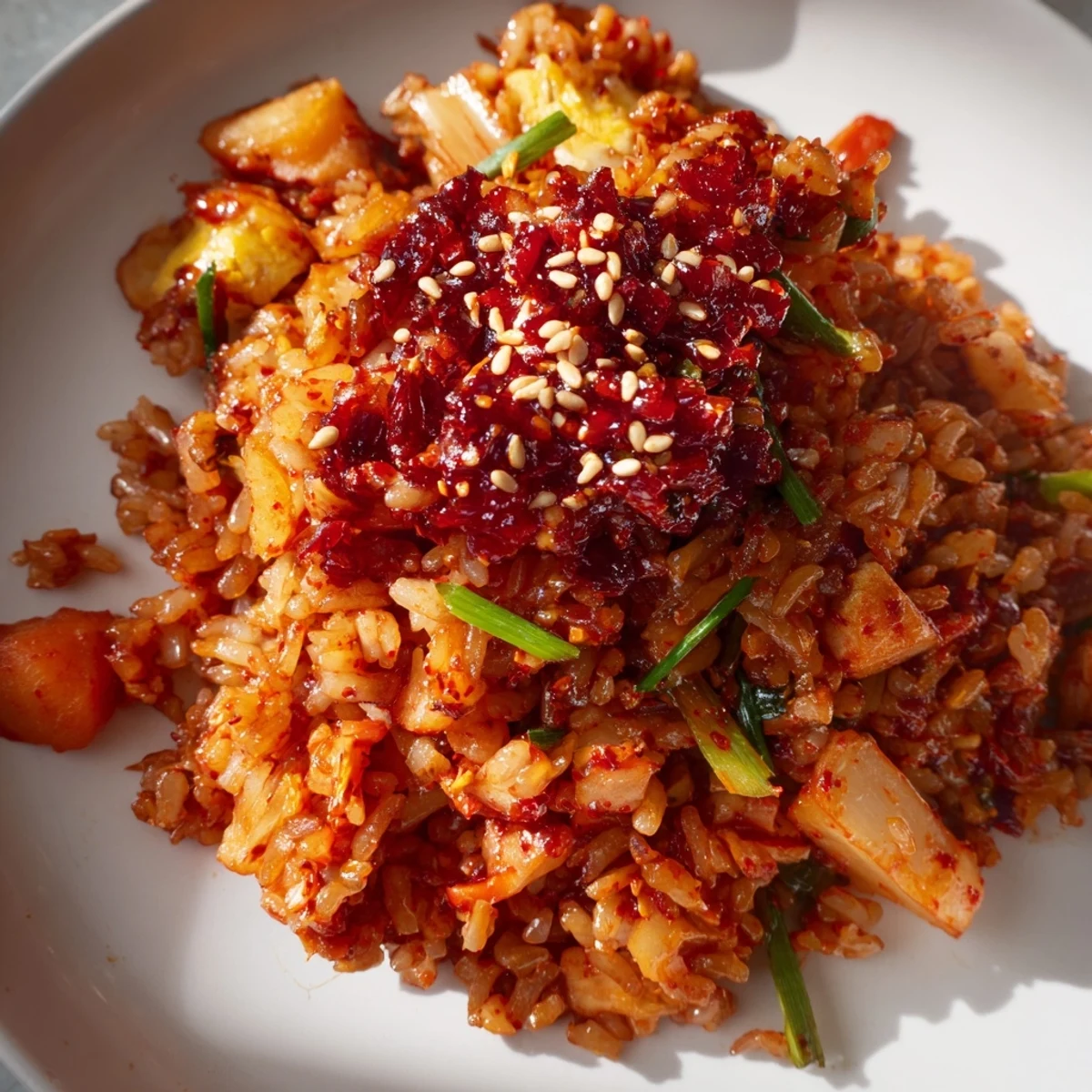
Save Trust your nose more than the timer when it comes to kimchi. The moment it smells heavenly and slightly caramelized, you are on the right track.
Recipe FAQs
- → Why use day-old rice for fried rice?
-
Cold, day-old rice has lower moisture content which prevents clumping and allows individual grains to crisp up beautifully in the hot pan. Freshly cooked rice tends to become mushy and sticky.
- → Can I make this dish vegan?
-
Absolutely. Simply omit the eggs or substitute with scrambled tofu for protein. Ensure your kimchi is vegetarian-friendly, as traditional versions often contain fish sauce or shrimp paste.
- → What is chili crisp?
-
Chili crisp is a Chinese condiment made by infusing oil with dried peppers, aromatics like garlic and shallots, and sometimes nuts. It delivers both heat and satisfying crunchy texture to dishes.
- → How spicy is this fried rice?
-
The heat level is customizable. Chili crisp provides moderate spice, while kimchi adds tangy warmth. Add gochujang for extra depth and heat, or reduce chili crisp for a milder version.
- → What can I serve with kimchi fried rice?
-
This makes a complete meal on its own, but pairs wonderfully with a crisp lager, cold green tea, or Korean side dishes like pickled vegetables and seaweed salad.
- → Can I use different types of rice?
-
Jasmine and short-grain white rice work best for their texture after refrigeration. Brown rice can be used but may require longer cooking time to achieve desired crispness.